How to Choose a Pest Control Company in Vancouver: Costs, Questions to Ask & Red Flags
If you only ask a Vancouver pest control company three things, ask these. Are you licensed and insured in B.C.? Does the quote include sealing the way in, or only the treatment? What happens if the pest comes back? The answers tell you whether two quotes are for the same job. This guide shows how to check each one, how to compare quotes against published prices, and which warning signs are worth walking away from.
Is the company licensed in B.C., and who will do the work?
Anyone who applies pesticides as a paid service in British Columbia needs a pesticide user service licence under the province's Integrated Pest Management Regulation. The work has to be done, or supervised, by a certified pesticide applicator. For pest control in and around homes, the province's certificate category is Structural Integrated Pest Management. Certificates are valid for up to 5 years and then have to be renewed.
Two follow-up questions are worth asking:
- Will the technician who comes to my home be certified? Under provincial rules, one certified applicator can supervise up to 4 uncertified workers, so the person at your door may be working under someone else's certificate. That can be fine, but you should know which it is.
- What liability insurance do you carry? Treatment can mean crawlspaces, attics and rooms people live in. If something is damaged, you want to know whose policy pays.
You can also check industry membership. The Structural Pest Management Association of British Columbia requires its member companies to be certified and licensed by the Ministry of Environment and to carry liability insurance.
Do they find the way in, or only treat what's inside?
A treatment deals with the pests already inside. If the gap they used stays open, more can come in the same way, and you end up booking the same job again.
According to the Province of B.C., mice can get in through a dime-sized opening, and rats need only a quarter-sized hole. Gaps around pipes, vents, utility lines and ageing foundations are common ways in. Sealing those gaps is called exclusion. The province says the best way to manage rodents is an integrated pest management approach, and its guide for residents says trapping or baiting alone won't work in the long term unless the entry points are sealed and food sources removed.
Ask it directly: "Is sealing the entry points included in this price, and will you write down what you sealed?" If sealing is a separate quote, or another trade's job, you are comparing two different products.
What method will they use, and why that one?
A good answer names the approach and gives a reason that fits your pest and your home. For example:
- German cockroaches in an apartment kitchen: gel baits and insect growth regulators placed where the roaches hide, rather than a general spray.
- Bed bugs: an inspection first to confirm how far they've spread, then heat, a targeted chemical treatment, or a combination.
- Rats and mice: sealing and trapping, with a note of where the entry points were.
An answer that is only a product name isn't really an answer.
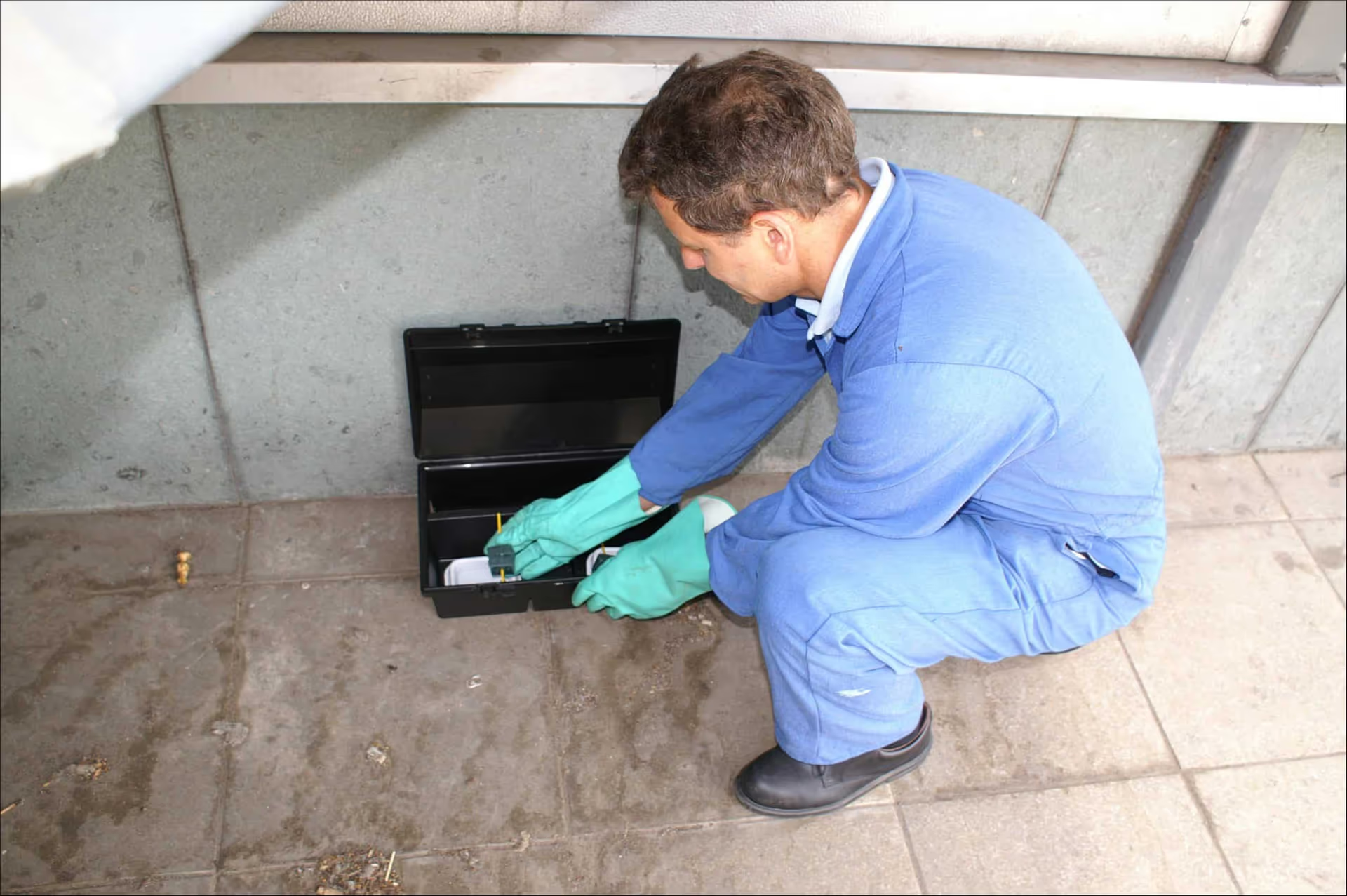
Rodent poison deserves its own question in B.C. Since January 21, 2023, second-generation anticoagulant rodenticides (SGARs) can only be used by businesses on the province's essential-services list. These baits stay in an animal's tissue longer than older products, and the province restricted them because pets, children and wildlife such as owls can be poisoned, directly or by eating a poisoned rodent. Baiting with them when there are no recent signs of rodents is prohibited. If a quote for your house is built around permanent poison stations, ask what product is in them and why sealing isn't part of the plan.
Ask what you need to do on the day too: how long people and pets should stay out, what to clear from the kitchen, and when you can clean. For typical timings, see our guide on how long to stay out of the house after treatment.
How to compare pest control quotes
Two quotes for the same pest can be for different work. Before you compare prices, check that each quote says:
- which pest, and which rooms or areas will be treated;
- whether sealing entry points is included;
- how many visits are included;
- what happens, and what it costs, if the pest comes back.
Many companies don't publish prices, which makes a fair comparison harder. Pesticon's standard residential prices give you one reference point:
| Job | Price |
|---|---|
| Common pests (mice, rats or cockroaches) in a standard home | $300–$350 plus tax |
| Larger properties, or homes with more than one kitchen | $400–$450 or more, depending on the treatment needed |
Bed bugs and commercial work aren't covered by these ranges, so ask any company for a quote based on your property. More on what we treat and how is on our page for pest control in Vancouver.
When one quote stands out from the others:
- A price that's noticeably higher or lower. That isn't a problem on its own. The quote may simply cover different work. Ask what's included and what a return visit would cost, then compare like with like.
- A quote that only says "treatment". Ask for the scope in writing so you know what you're paying for.
What happens if the pest comes back?
Return-visit terms vary between companies. Before you pay, ask how long the cover lasts, what triggers a return visit, and what you have to do to stay eligible.
Ours is the 100-day guarantee: if pests return within 100 days, we re-treat at no additional cost. It applies to our major pest control services. Whoever you hire, get their terms in writing.
Do you need one visit or an ongoing plan?
Ask the company which one your problem needs, and why. Scheduled visits and monitoring records are common for offices, restaurants and other food businesses, where health-code compliance is part of the job.
For a house, be cautious about a monthly or seasonal perimeter-spray contract sold to fix a one-off problem. On hard surfaces around a building, rain can wash a perimeter spray away; that's one reason the University of California's integrated pest management program advises against spraying there. A spray schedule also does nothing about the gap the pests are using. If a company suggests a 12-month contract on the first visit, ask what the contract does that a single treatment plus sealing would not.
How to read pest control reviews
The written reviews tell you more than the star rating. Read the three- and four-star reviews as well as the five-star ones, and look for:
- how the company handled a callback when a pest came back;
- whether reviewers say the technician explained what they found and where;
- whether recent reviews describe a home and a problem like yours.
Red flags worth walking away from
- No licence or certificate details when you ask.
- A firm price for bed bugs or a large infestation before anyone has inspected the property.
- A long contract pushed on the first visit for a one-off problem.
- No written quote, or a quote that just says "pest treatment".
- Return-visit conditions they won't explain until after you've paid.
- Poison bait as the whole rodent plan, with no mention of entry points.
Choosing a company in Burnaby: apartments, strata and detached homes
Burnaby's housing changes which questions to lead with. According to the City of Burnaby's 2021 census figures, just over half of the city's 101,135 homes are apartments:
- 29,715 in buildings of five storeys or more;
- 23,835 in buildings of four storeys or less.
Another 38,815 are single and two-family houses, and 40% of Burnaby households rent.
In an apartment or strata building, ask whether the company will look at the suites next to, above and below yours, and whether it will work with your strata council or building manager. If the problem started in a neighbouring suite, treating only yours may not end it. Each strata has its own rules about repairs, so check who arranges work in shared areas before you book.
In a detached or two-family house, the sealing question is the one to press on. Ask the company to show you the entry points it found and to list what it sealed.
For the pests we treat in Burnaby and when each one is most active, see our page on pest control in Burnaby.
If you rent
The province says landlords are generally responsible for controlling insect infestations, like bed bugs. Whether a landlord is responsible for other pests, like rodents, depends on the municipality's standards of maintenance bylaw, and those bylaws differ from city to city. Either way, a written record of what was found, where, and what was recommended makes the conversation with a landlord easier, and we can document an infestation for you if you need it. There's more in our guide on who pays for bed bug treatment in a Vancouver rental.
A short checklist before you book
- Licence and applicator certificate confirmed
- A written quote that says whether sealing is included
- The method explained for your pest and your home
- A price you can compare against a published range
- Return-visit terms in writing before you pay
If you already have a quote and want a second opinion, or you'd like us to look at the problem ourselves, get a free quote or call (604) 229-1097.

HomeStars Best of the Best Award Winner