
“Kamran has provided a few services at Casa del Sol - bed bugs, ants and wasps. He is efficient, and very trustworthy. I appreciate his calm patience and support when managing our various anxieties and phobias.”
August 2026
Carol Rad
Protect your property with expert termite control in Vancouver. Pesticon delivers fast, targeted solutions backed by decades of experience













Pesticon Pest Control Inc.
1450 west Broadway Vancouver BC, V6H 1H4
Phone: +1 (604) 229-1097
Surrey, Burnaby, Langley, Richmond, Coquitlam, North Vancouver & West Vancouver
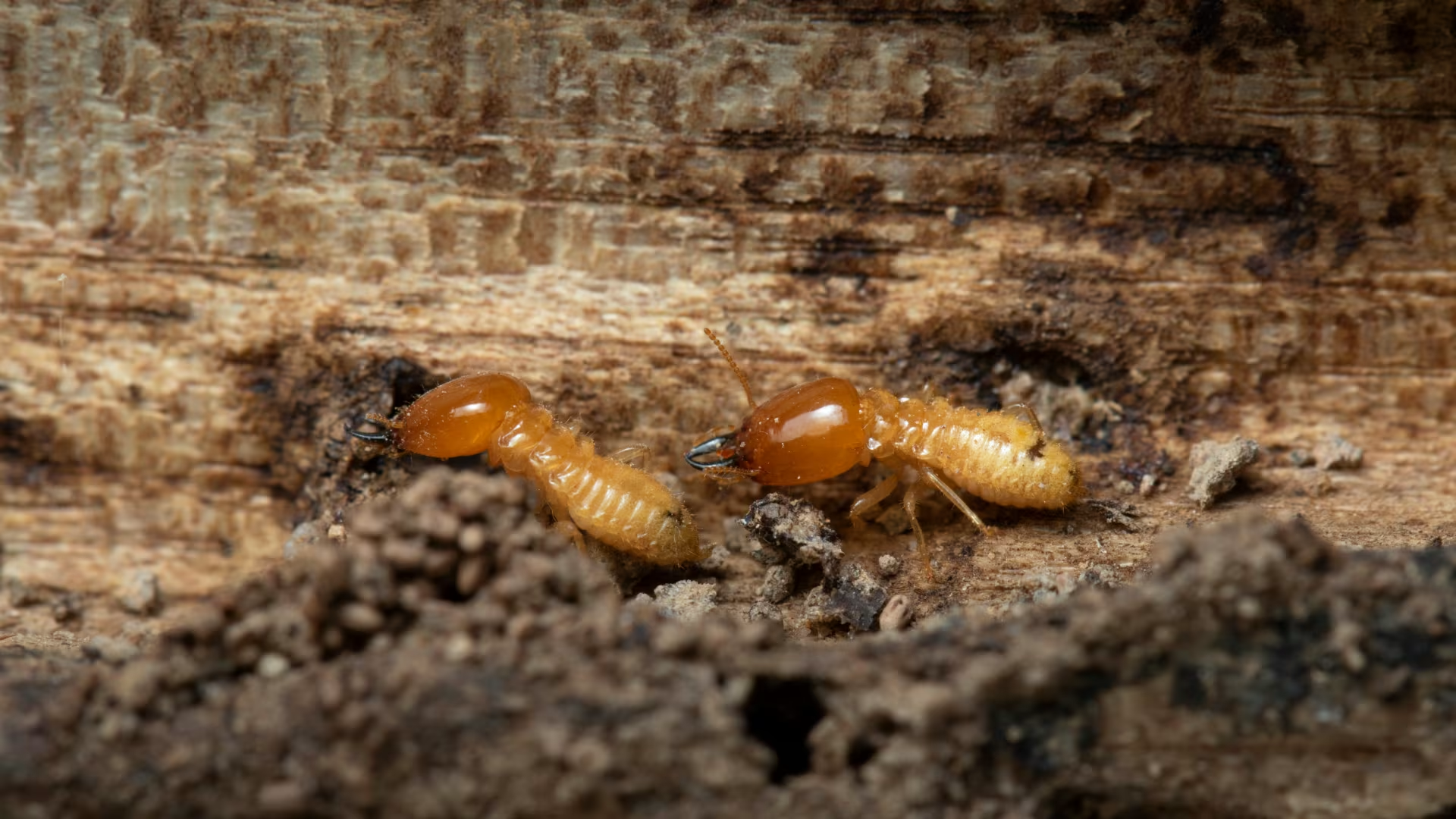
Vancouver’s environment creates ideal conditions for termite activity. Consistent moisture, moderate temperatures, and widespread wood construction make properties vulnerable year-round. Subterranean termites thrive in damp soil and enter through foundation gaps, while dampwood termites target moisture-damaged wood. Because they operate behind walls and below floors, infestations often go unnoticed until structural damage has already begun.
Common Signs:
Risks & Damage:
Vancouver's damp winters and mild summers create ideal conditions for pests year-round. These are the ones our technicians see most often:
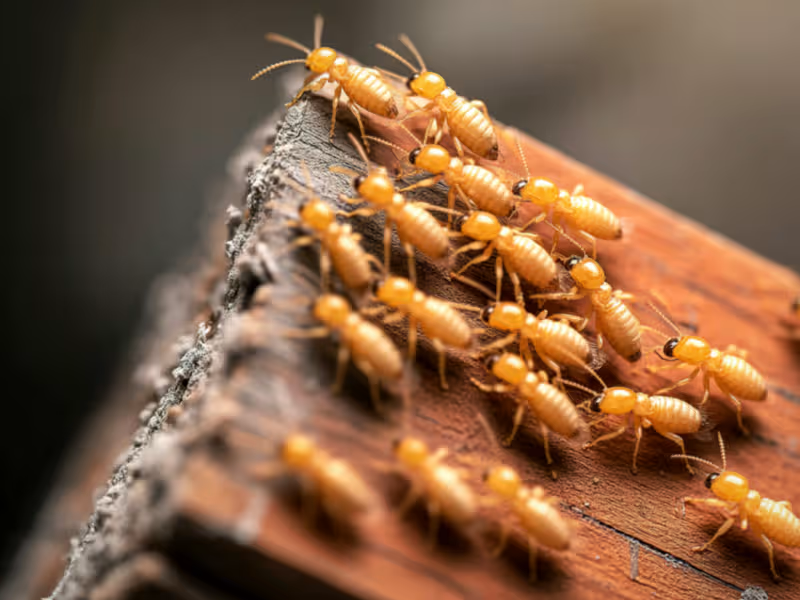
The most common type in the region. They live in soil and build mud tubes to access structures, making them difficult to detect early.
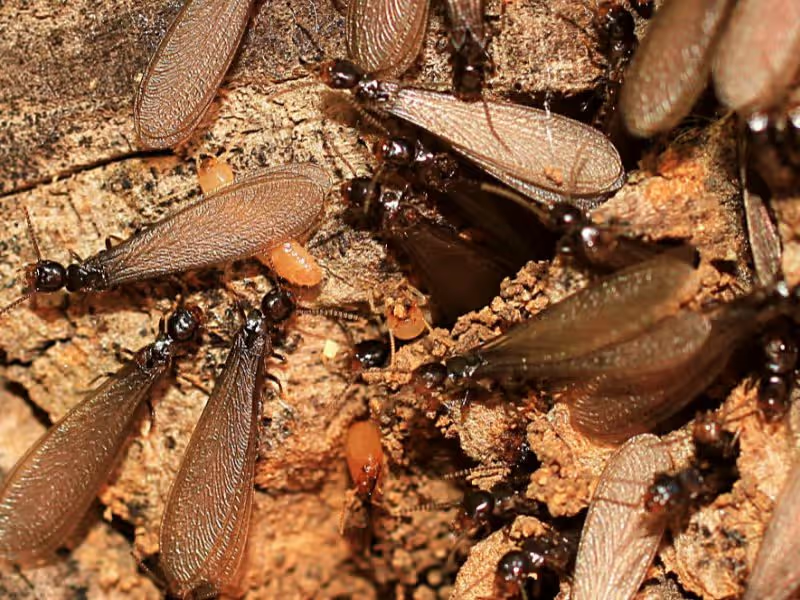
Typically found in moisture-damaged wood. Common in coastal climates like Vancouver where damp conditions persist.
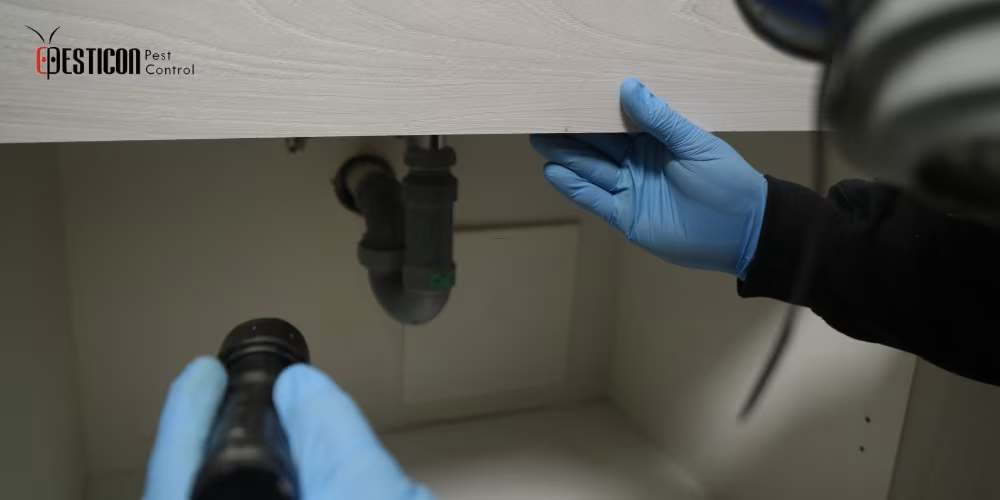
Thorough assessment of your property to locate activity and entry points.
Pinpoint affected zones, nesting locations, and structural vulnerabilities.
Choose the most effective approach based on infestation level and property type.
Apply targeted treatments including liquid barriers, bait systems, or wood treatments.
Ongoing monitoring to ensure complete elimination and prevent recurrence.
We protect homes, condos, and townhouses from structural damage caused by termites. Our approach focuses on long-term protection, not temporary fixes, ensuring your property remains secure.
From offices to warehouses and retail spaces, we deliver discreet and effective termite control solutions. Treatments are designed to minimize disruption while meeting safety and compliance standards.

Don’t wait for termites to cause serious damage. Pesticon provides fast, reliable, and long-lasting termite control across Vancouver and surrounding areas.
📞 Call (604) 229-1097
Book your inspection today
Same-day service available — protect your property before the damage spreads.
The cost of termite control depends on several factors:
Severity of the infestation
Size and structure of the property
Type of treatment required
Accessibility of affected areas
A professional inspection is the best way to determine the right solution and cost.
Yes, though not the species most people picture. The coast of British Columbia has western subterranean termites, which nest in soil and reach a building through wood-to-ground contact or mud tubes they build across foundation walls. Pacific dampwood termites also occur here and behave differently: they need consistently wet timber, so they turn up in decks, fence posts, leaking window framing and structural wood that has been damp for a long time.
This matters because most termite advice online is written for the aggressive species found in the southern United States, where treatment expectations and costs are very different. A local inspection identifies which species you actually have, and that determines the entire treatment plan.
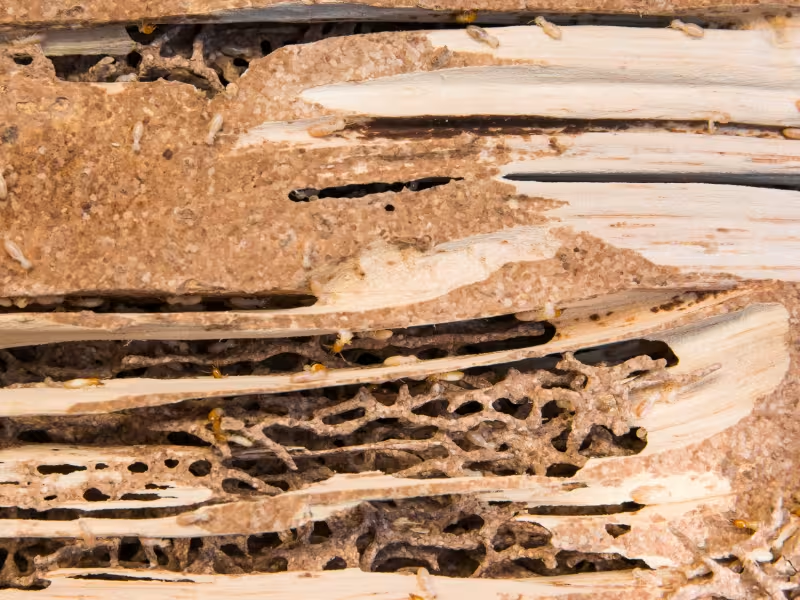
The clearest sign is mud tubing: pencil-width earthen tunnels running up foundation walls, piers or crawlspace posts, which subterranean termites build to stay humid while moving between soil and wood. Others are subtler. Timber that sounds hollow when tapped, paint that blisters or ripples over a flat surface, doors and windows that suddenly stick, and small piles of discarded wings near sills after a spring swarm.
Dampwood termites leave a different trace. Their galleries are smoother and often packed with faecal pellets, and they are usually found in wood that is already obviously wet. If you can push a screwdriver into exterior framing with light pressure, that timber needs inspecting regardless of what caused it.
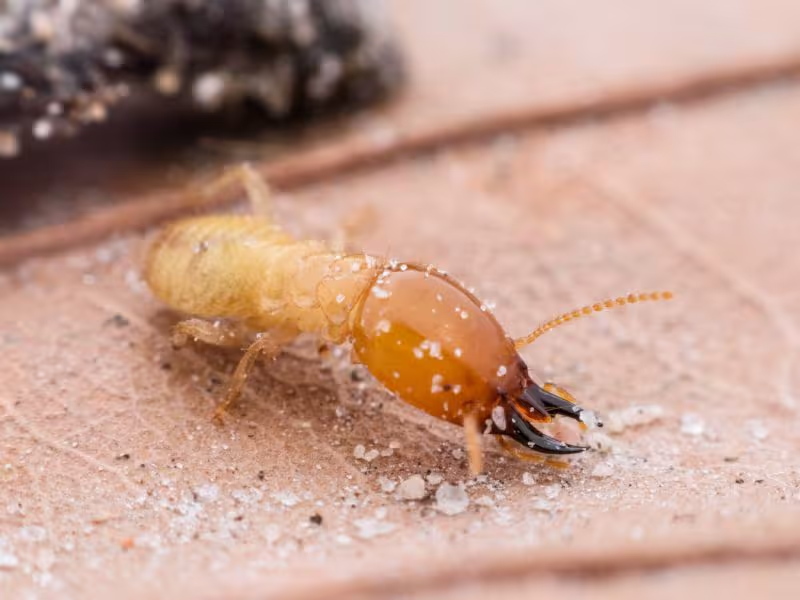
Termites are frequently mistaken for carpenter ants. A useful distinction: termites have straight antennae, a broad waist and equal-length wings, while ants have elbowed antennae, a pinched waist and front wings longer than the rear. Carpenter ants also push sawdust out of the nest, and termites do not.
Treatment starts with a full inspection of the foundation, crawlspace, and every point where soil or damp material contacts structural timber. For subterranean termites the work is usually a soil treatment forming a treated zone around the structure, sometimes combined with a monitoring and baiting program where the colony is drawing from beyond the property line. For dampwood termites, removing the moisture source and replacing the affected timber does most of the work, with targeted treatment of what remains.
Cost depends on the species, the size of the foundation being treated and how far the damage has already gone, so we quote after inspection rather than over the phone. What we can say plainly is that termite repair costs far more than termite treatment, which is why an inspection is worth booking on suspicion rather than on certainty.
Every termite job carries our 100-Day Pest-Free Guarantee, and our technicians are fully licensed and insured across Metro Vancouver.
Leave the area alone. The single most common way a termite job gets harder is a homeowner breaking open mud tubing or spraying a suspected gallery before the inspection. Subterranean termites respond to disturbance by abandoning that route and re-entering somewhere else, which hides the evidence a technician needs to trace the colony and can push the infestation into a part of the structure nobody is looking at.
Photograph what you found and note exactly where it was, then leave the tubing, the damaged timber and any discarded wings in place. If you have already opened something up, say so when you call. It changes what the inspection is looking for and it is far better we know.
Retail termite products are a poor fit for the species found here. Most are contact insecticides, and a subterranean colony can be almost entirely outside the structure, in soil, well beyond anything sprayed indoors. Killing the workers you can see does not touch the colony producing them.
Both local species need moisture, so termite prevention here is mostly moisture management. Keep soil, mulch and garden beds below the level of the siding and away from direct contact with framing. Break any wood-to-ground contact: fence posts, deck supports, stair stringers and planters set straight into soil are the routes we find most often.
Keep gutters and downspouts discharging well clear of the foundation, fix plumbing and roof leaks promptly rather than seasonally, and make sure crawlspaces are ventilated and have an intact vapour barrier. Move firewood, lumber offcuts and cardboard storage off the ground and away from the building, since a woodpile against an exterior wall is both a food source and a bridge.
For older properties and heritage buildings, where original timber often sits close to grade and cannot simply be replaced, an annual inspection is the practical safeguard. Catching activity in a sill plate is a repair. Catching it after it has reached the floor structure is a rebuild.
Need broader coverage? See all our pest control Vancouver services across Metro Vancouver.
4.8 Average Rating | 150 Reviews
“Kamran has provided a few services at Casa del Sol - bed bugs, ants and wasps. He is efficient, and very trustworthy. I appreciate his calm patience and support when managing our various anxieties and phobias.”
August 2026
Carol Rad
“I find Kamran to be knowledgeable, honest and effective in the work he's done for us.”
August 2026
Albert Mann
“Fantastic experience! Pesticon’s staff were courteous, efficient, and thorough. They solved our pest issue completely, and the results have lasted for months. Truly a five-star company!”
October 2025
Edla Nissi Christina
“Amazing experience! They responded quickly and handled the pest issue with care. I haven’t seen a single bug since! Highly recommend Pesticon to everyone in Vancouver.”
October 2025
Tarik Gafic