
Seal Cracks and Openings
Seal all cracks and little openings on the exterior part of the house, including pipes and other wall penetrations, the reason being that they are tiny creatures and can easily make their way inside.
Pesticon Pest Control — Serving Metro Vancouver Since 2015.













Pesticon Pest Control Inc.
1450 west Broadway Vancouver BC, V6H 1H4
Phone: +1 (604) 229-1097
Surrey, Burnaby, Langley, Richmond, Coquitlam, North Vancouver & West Vancouver
Carpenter ants got their name from their ability to hollow their nest in decaying woods creating a smooth channel and galleries in it. Unlike termites, they do not eat woods but they can damage it leading to severe structural damage to your home. It can take carpenter ants years to cause significant damage.
Carpenter ants are no aliens to Vancouver homes as they can be very damaging and cause a lot of troubles for homeowners who are disturbed at the sight of heaps of sawdust being kicked out of wooden structures in the house.
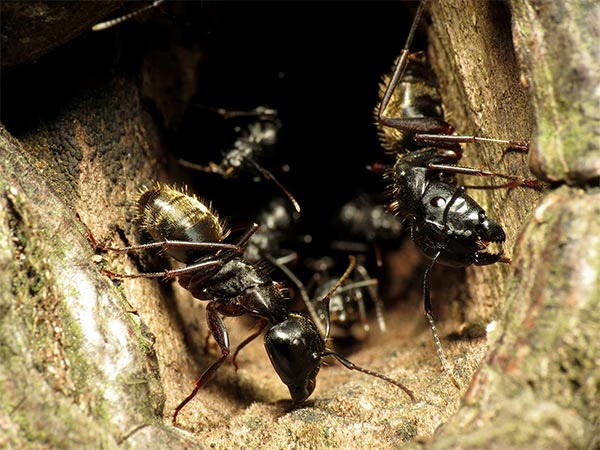
The Camponotus modoc commonly referred to as the “big black ant” is the most common carpenter ant species found throughout Vancouver especially in the moist rich areas or places that are heavily covered with plants or trees, so if you stay in one these areas or both you will see them.
These ants can excavate dry wood so well but prefer to attack wood that has already been damaged by moisture leading to a further weakening of the wood. They gain entrance into homes through cracks and holes where pipes and wire pass through into the house.
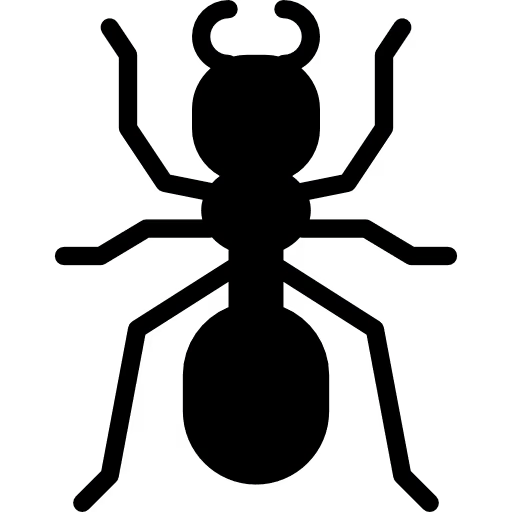
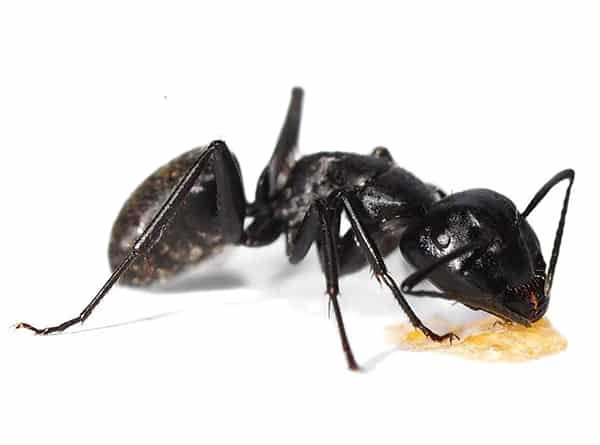
When viewed from the side, it has an evenly rounded thorax with a bent antenna and a thin waist that is detached from the upper and lower body segments. They are black in color with red legs ranging in size from 6mm to 2.5 cm.
Carpenter ants are the largest ant you are likely to see indoors here, up to about 13 mm for workers, usually black but sometimes with red or amber on the thorax. The reliable identifier is the body shape rather than the colour: a single node at the waist and an evenly rounded thorax, where most look-alike species have two nodes and an uneven profile.
The other tell is what they leave behind. Carpenter ants do not eat wood, they excavate it, so they push the debris out of the nest. Small piles of what looks like coarse sawdust, often with insect fragments mixed in, under a window frame, door sill or deck joist mean an active nest is directly above. Winged swarmers indoors in spring mean the colony has matured and is producing satellites, which is a much bigger job than a single nest.
A carpenter ant colony works quietly inside structural timber for years before anything is visible from the outside. Because they target wood that is already damp, the nests concentrate exactly where damage matters most: rim joists, sill plates, window and door framing, deck ledgers and the roofline around leaking flashing. By the time a floor feels soft or a frame flexes, the galleries are usually extensive.
Vancouver’s climate makes this worse than it would be in a dry region. Long wet winters keep exterior timber at the moisture level carpenter ants prefer, and mature trees close to houses give colonies a permanent outdoor base to re-invade from. That is why treating the indoor trail alone almost never works.
Our technicians locate the nest before treating anything. That means tracing foraging trails, checking moisture-damaged timber, and inspecting the tree and woodpile contact points around the building, since the parent colony is often outdoors with satellite nests inside the structure.
Treatment then combines a non-repellent product the ants carry back to the colony with direct application into the galleries where we find them. Repellent over-the-counter sprays are counterproductive here: they scatter the colony into new satellite nests and make the infestation harder to resolve, which is the most common reason a DIY attempt makes the job bigger.
We finish by identifying the moisture source that made the wood attractive in the first place. Without that, a treated property is simply a candidate for re-infestation next season. Every carpenter ant job carries our 100-Day Pest-Free Guarantee.
Prevention here is a moisture and access problem rather than a spraying problem. Trim branches so nothing overhangs or touches the roof and siding, since a branch in contact with the building is a direct bridge from an outdoor parent colony. Move firewood, lumber and yard waste off the ground and away from exterior walls, and pull mulch and soil back from the siding line.
Then deal with the water. Keep gutters clear and downspouts discharging away from the foundation, fix roof and plumbing leaks quickly, and check the framing around windows, doors, skylights and deck ledgers, which is where wet timber and structural wood most often meet. Ventilate crawlspaces and attics so trapped humidity does not keep the wood at the moisture level the ants are looking for.
Seal the obvious entry routes with caulk or appropriate filler, particularly gaps around utility penetrations, and repair or replace timber that has already gone soft. Replacing a rotted sill or deck board removes the nesting site rather than treating around it, which is the difference between a fix and an annual recurrence.
The first sign of an infestation is when you find a carpenter ant in your home in the springtime foraging for food. But this does not mean that they are nested in your house, because these ants can forage for food up to 90 meters away from their parent nest that may be situated somewhere outside your home whether in trees, stumps, water damaged wood structures. So it simply means that when you see a swarm of carpenter ants in your home, most times they are not nested inside but when you see a swarm of carpenter ants outside then they already have an established colony nearby.
If they have made their way into your home, you may be able to hear the scurry sound that they make when chewing on wood or whatever they are excavating - this indicates that there is an active nest and it can be heard clearly when the room is quiet especially at night.
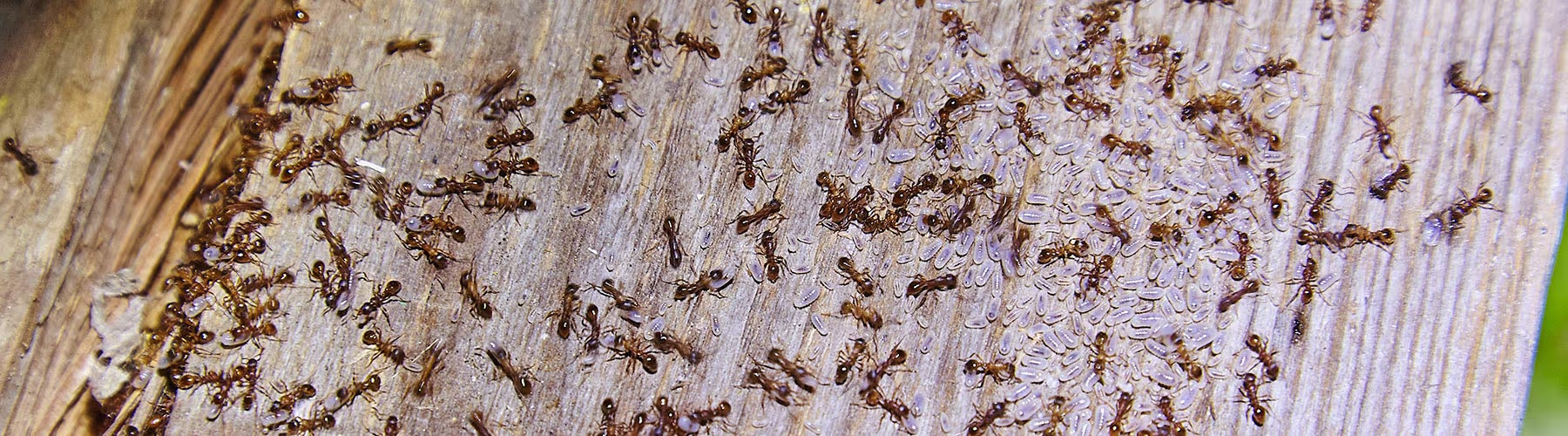
The moment you find piles of sawdust or frass (frass refers to ant parts and other debris) that they leave beneath, behind, or beside wooden structures as a result of their excavating action is a sign that they have started excavating living space out of the wood structures.
Also when you notice reproductive winged insects flying inside your home during spring, it means that new carpenter ants colonies have been established. And this can be alarming as large winged insect ants begin to emerge from your home.
Carpenter ants can migrate across several residential homes in foraging for food because of their nature as prolific travelers. The following are ways that you can prevent their infestations:
Seal all cracks and little openings on the exterior part of the house, including pipes and other wall penetrations, the reason being that they are tiny creatures and can easily make their way inside.
For an infestation of the carpenter ants to occur within the building it means that there is a moisture problem in the house, for example, these ants are sometimes found around sinks, laundry areas, and bathrooms. So you repair and replace any moisture-damaged wood and dry up leakages inside and outside of the home.
Trim or cut tree branches so they do not touch the exterior part of the house - the roof and the wall, as it creates a route for them to enter.
Maintain a tidy kitchen and store food properly, this will ensure that ants do not inhabit your home rather they leave for better grounds.
Ensure that wood debris is gathered together and located far away from the home.
Use concrete pier blocks underneath wooden parts of the deck and porches so that they would not touch the ground.
Above all, it could be difficult for you as an individual to effectively control carpenter ants’ infestation, so you may need to consult the services of a professional pest control exterminator.
Getting rid of carpenter ants can be a difficult and near-impossible task to carry out. A successful carpenter ant control involves the finding and removing of the nests in your wooden structures and therefore prevents infestation from the remaining ants that are still existing in the neighborhood but hiding in their colonies. You locate them, through the sawdust that they create when they dig out their tunnel.
Carpenter ants are commonly misidentified so it is advisable to contact a pest technician in Vancouver to give you quality, effective license pest control services in, as well as the surrounding communities.
Carpenter ants are capable of causing great damage to wood structures in your home, though it takes years for significant damage to show. Having a heavy infestation may lead to loss of wood structures and damages that may cost you, if not handled. To eliminate them, contact Pesticon Pest Control to solve the problem. We are keen to render our professional services to get rid of this pest.
Need broader coverage? See all our pest control Vancouver services across Metro Vancouver.
4.8 Average Rating | 150 Reviews
“Kamran has provided a few services at Casa del Sol - bed bugs, ants and wasps. He is efficient, and very trustworthy. I appreciate his calm patience and support when managing our various anxieties and phobias.”
August 2026
Carol Rad
“I find Kamran to be knowledgeable, honest and effective in the work he's done for us.”
August 2026
Albert Mann
“Fantastic experience! Pesticon’s staff were courteous, efficient, and thorough. They solved our pest issue completely, and the results have lasted for months. Truly a five-star company!”
October 2025
Edla Nissi Christina
“Amazing experience! They responded quickly and handled the pest issue with care. I haven’t seen a single bug since! Highly recommend Pesticon to everyone in Vancouver.”
October 2025
Tarik Gafic
Our Expert Pest Control Technicians serve Vancouver and the surrounding area with same day or next day service. If you're having a pest or wildlife control issue, please contact us for a free quote. Explore our full pest control Vancouver services.