
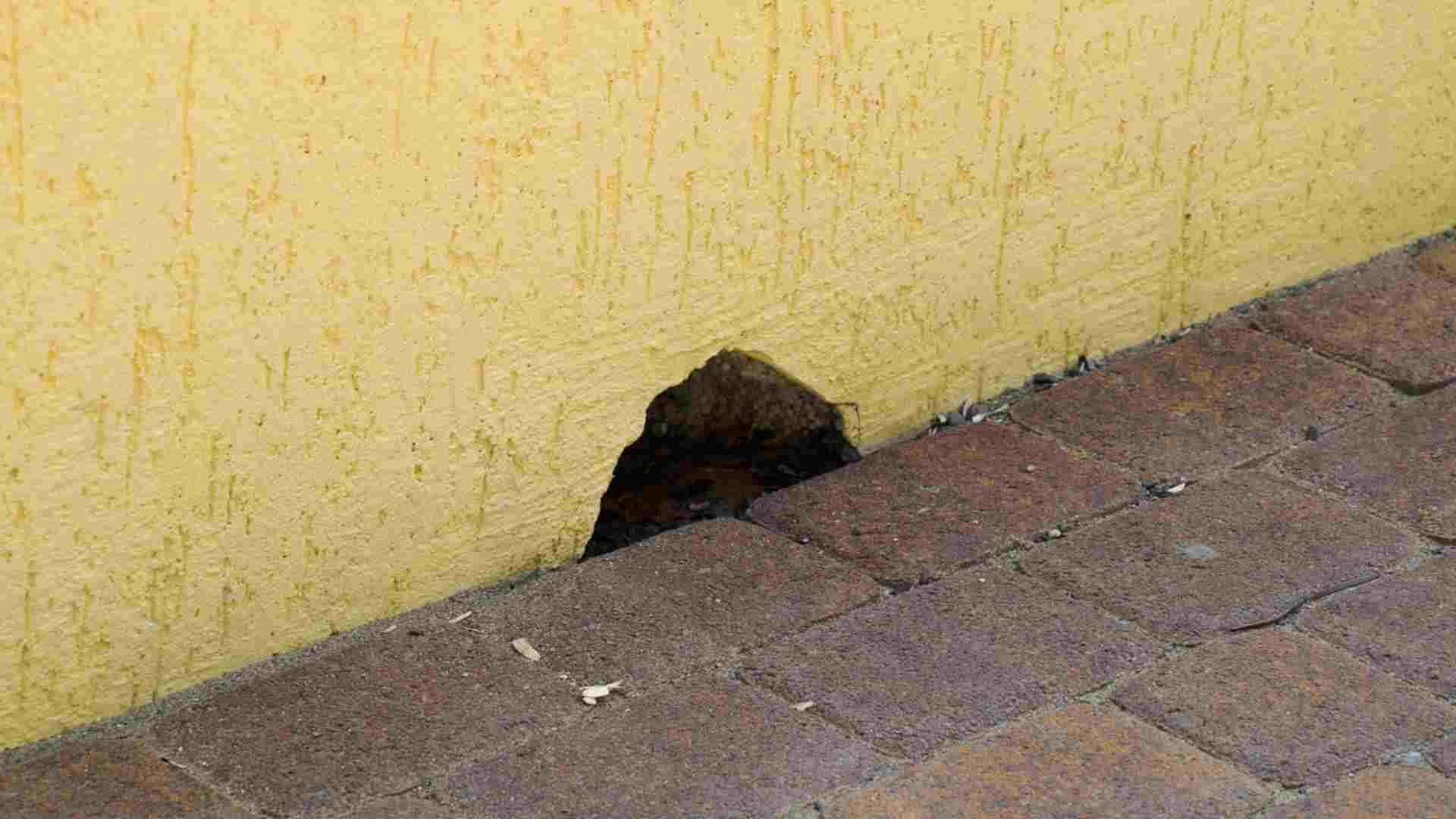
Mice or Rats in Your Walls? A Vancouver Homeowner's Guide
TL;DR
- Scratching or scampering inside the walls at night is one of the signs of mice or rats that Health Canada lists. Confirm it with droppings, gnaw marks or rub marks before you treat.
- Where you hear it can be a clue, but it won’t reliably tell you which rodent you have. The City of Vancouver says roof rats nest in ceilings, attics and trees, Norway rats in burrows and crawl spaces, and house mice in corners close to food, and the noise isn’t always coming from the nest.
- Don’t sweep or vacuum droppings; HealthLinkBC advises against both. Air the space for 30 minutes, wear gloves, goggles and a well-fitting mask, and soak the droppings in disinfectant for 10 minutes before you wipe them up. If droppings or nests are spread through insulation or a wall cavity, have the area assessed first.
- Inside a house, traps are a better first choice than poison, because a poisoned rodent can die where you can’t reach it. Since January 21, 2023, the Province of BC has allowed one class of rodent poison, second-generation anticoagulant rodenticides (SGARs), to be used only by essential services and by licensed pest control companies hired by an essential service. The Province’s guidance says SGARs cannot be used in or around most residential buildings.
- Control only lasts once the gaps are sealed. Mice fit through a crack the size of a dime and rats through a hole the size of a quarter (Health Canada).
What does scratching in the walls at night usually mean?
Most often, mice or rats. Health Canada names “scampering and scratching sounds in the walls of your home at night” as a sign of an infestation, and the City of Vancouver notes that rats and mice are typically more active at night. HealthLinkBC adds that when the house is quiet you may hear them moving between the walls, in attics and under foundations, or chewing.
A sound on its own doesn’t prove it. Check for the other signs the City of Vancouver lists:
- droppings and urine stains
- gnaw marks and chew marks
- rub marks, the dark greasy smears rodents leave along regular routes
- runs and tracks in dust
- nests and burrows
Heavier noises from the roof space can also come from larger animals such as raccoons or squirrels, which need a different approach. For a fuller checklist of what to look for indoors, see our guide to the signs of a mouse infestation.
Mice or rats? What the noise can and can’t tell you
The City of Vancouver names three rodents as common in the Vancouver area, and each tends to nest in a different part of a building.
| Rodent | Where it usually nests (City of Vancouver) | Where you might hear it (a clue, not proof) |
|---|---|---|
| House mouse | Corners, 10 to 30 feet from food and water | Lower walls and cabinets near the kitchen, pantry or laundry |
| Roof rat | Trees, ceilings or attics, 100 to 150 feet from food and water | Ceilings, upper walls and the attic |
| Norway rat | Burrows or crawl spaces, 100 to 150 feet from food and water | Crawl spaces, basements and lower walls |
The City lists a house mouse at about ¾ oz and a Norway rat at 10 to 17 oz. Heavier thumps and louder gnawing may suggest a rat, but loudness on its own is not a reliable way to tell a mouse from a rat.
Treat the table as a starting point, not an identification. Rodents move around inside wall cavities, so the noise may not be coming from where the nest is. To know which one you have, look at the droppings or the animal itself. Our guide to telling mice and rats apart covers the differences in size and droppings.
Is it safe to clean up droppings yourself?
For a few droppings in a living space, HealthLinkBC sets out a method you can follow yourself. Health Canada notes that mice and rats are carriers of disease. HealthLinkBC’s clean-up steps are in its hantavirus file, File #36, which says that in Canada the virus has only been found in wild mice, specifically the deer mouse, and that house mice, roof rats and Norway rats are not known to spread it. Each year only a couple of people in BC report being ill with hantavirus, but the illness is serious, so the precautions matter.
File #36 sets out these steps:
- If the area is enclosed, air it out for 30 minutes before you start.
- Wear rubber gloves, goggles and a well-fitting filter mask. The file lists N100, P100 or R100 masks, or a respirator with P100 cartridges, and says an N95 mask may also be used. A dust mask meant for painting or insulation work is not the same.
- Make a disinfectant solution. Most general purpose household disinfectants and detergents work, or you can use diluted bleach at 1 part bleach to 9 parts water.
- Pour the solution gently over the droppings and nesting material instead of spraying it, then let it soak for 10 minutes.
- Wipe everything up with paper towels and put it in a plastic garbage bag. Don’t sweep dry floors and don’t vacuum.
- Double-bag the waste, seal the bags and dispose of them according to local bylaws.
- Shampoo or steam-clean carpets, wash clothing and bedding in hot water with detergent, and disinfect floors, countertops, cabinets and drawers that mice have been in contact with.
- Wash your gloves with disinfectant or soap and water before you take them off, then wash your hands with soap and water.
HealthLinkBC’s general rodent file, File #37, gives a slightly weaker bleach mix for the same job: 1 part bleach to 10 parts water. The steps above follow File #36, the hantavirus file, which is also the more recently updated of the two (August 2025). Both files say a general purpose household disinfectant works.
If droppings or nests are spread through attic insulation, a crawl space or the inside of a wall, don’t disturb them yourself; have the area assessed first. File #36 notes that workers and homeowners can be exposed in crawl spaces and under houses. For droppings found around the yard, garage or outbuildings, see what to do if you find mouse droppings.
Should you use traps or poison for rodents in walls?
Inside a home, start with traps.
- Traps work when placed well. Health Canada says snap traps and electronic traps “are easy to use and very effective if well positioned and set properly”, and that every type of trap should be checked daily. If rats seem to avoid them, see what to do when rats won’t go near your traps.
- Poison has a particular downside with wall rodents. HealthLinkBC File #37 says “it is not a good idea to use poison or baits to control rodents”, because poisoned rodents can crawl away and die where their bodies are hard to find, which causes unpleasant odours. Inside a wall cavity, that is hard to fix.
- Bait is never the whole answer. Health Canada says baits should not be the only method used, and must sit in a tamper-proof bait station anywhere children or pets can reach. Our article on rat poison and pets covers that risk in more detail.
- One class of poison is restricted in BC. Since January 21, 2023, the Province of BC says second-generation anticoagulant rodenticides (SGARs) can be used only by essential services, such as hospitals, food facilities and grocery stores, and by licensed pest control companies hired by an essential service. Even then, they must follow the Province’s integrated pest management and record-keeping rules. The Province’s guide for pesticide vendors adds that SGARs “cannot be used in or around most residential buildings”. The Province made the change because of the effects on owls and other wildlife, which can be poisoned by eating poisoned rodents. The rule covers SGARs, not every rodent poison: HealthLinkBC’s File #37 still sets out precautions for homeowners who decide to use rat poison after prevention hasn’t worked.
How do you get rid of mice or rats in your walls for good?
Removal only lasts if they can’t get back in. Pesticon’s published process removes the rodents first and then seals the entry points, where the repair is within the scope of the job.
Once they are gone, check the outside of the house for:
- Openings wider than 6 mm (¼ inch). HealthLinkBC File #37 says to seal any possible entry point in the building exterior larger than that.
- Door thresholds and jambs. Health Canada notes that even the small gap under a worn door threshold lets mice in; mice can squeeze through a crack the size of a dime, rats through a hole the size of a quarter.
- The line where siding meets the foundation, and any cracks in the foundation itself. HealthLinkBC names both.
- Crawl space openings and vents. HealthLinkBC recommends covering crawl spaces and attic vents with 6 mm (¼ inch) metal screening or steel mesh.
- The roof, if you suspect roof rats. HealthLinkBC says to check it for holes. See our guide on how to rat-proof your roof.
The City of Vancouver also suggests sheet metal kick plates on exterior doors and metal flashing between the foundation and the ground.
Then take away what drew them in. The City’s list includes:
- garbage in cans with tight-fitting lids, and compost managed properly
- fallen fruit, spilled bird seed and leftover pet food cleared away
- leaky pipes and taps repaired
- firewood and lumber stored away from the walls and about 1 foot off the ground
- shrubs and mulch moved back from the foundation, and clutter cleared from the yard, garage and basement
Renting in Vancouver? Who deals with rodents in the walls
Under the City of Vancouver’s guidance, a tenant with rodents in the home should go to the landlord first. If the landlord doesn’t deal with it, the tenant can report the problem to the City online. For landlords, the City’s advice is to call a pest control company. For rodents in or near restaurants, grocery stores or other businesses that handle food, the City refers people to Vancouver Coastal Health at 604-736-2033.
When should you call a professional?
HealthLinkBC File #37 advises contacting a licensed company with certified staff if you can’t control rodents on your own. It is usually time when:
- the noises carry on after you have been trapping for a while
- you can’t find the entry points, or they are on the roof or high on the house
- droppings or nests are spread through insulation or inside the walls
- you hear activity in more than one part of the house
Whoever you hire, ask whether the visit covers the whole house and the entry points, not just bait in the kitchen. Pesticon’s published mice and rat process has four stages: an inspection for signs of activity, entry points and risk areas; targeted removal; sealing and proofing cracks, holes and gaps after removal, where the repair is within the job’s scope; and follow-up visits to check that the problem is resolved.
The Province of BC says “the best way to manage rodents is with an integrated pest management approach”. The integrated pest management principles it lists include preventing rodents, using alternative control methods such as traps, identifying the species, and monitoring where the rodents are and how many there are.
Rodent control from Pesticon’s Vancouver branch
Pesticon’s Vancouver branch opened in 2015 and works from an office at 1450 West Broadway. The Vancouver business is BBB Accredited with an A+ rating, and Pesticon is listed as a member company of the Structural Pest Management Association of BC (SPMABC). Customers have named Kamran in Google reviews of the Vancouver branch since 2016. Several say he explained the plan clearly, and two mention his advice on keeping the problem from coming back.
Our Pest Control Vancouver team works with homes and businesses in Vancouver, Burnaby, Richmond, Surrey, Coquitlam, Langley, North Vancouver and West Vancouver. If you are hearing something in the walls, book a mice and rat inspection and a technician will look for how they are getting in as well as where they are now.
Frequently asked questions
What could be causing noises in my wall at night?
Usually a mouse or a rat moving, nesting or gnawing inside the cavity, since both are most active after dark. Confirm it with droppings, gnaw marks or rub marks before you treat, because larger animals in the roof space can also make noise.
How do you tell if you have rats in your walls?
Noise alone won’t tell you for certain. Heavier thumps, or noise in the ceiling or attic, can suggest rats, but the sound may come from somewhere other than the nest. Look for other signs as well: Health Canada lists burrows or holes in and around foundation walls, and the City of Vancouver lists droppings, gnaw marks, rub marks and tracks. The droppings, or a sighting of the animal, will tell you more than the sound does.
Will mice in the walls leave on their own?
Don’t count on it. Health Canada advises tackling occasional invaders right away to avoid a severe infestation. Trap them, find and seal the entry points, and remove the food and shelter that drew them in.
Can mice or rats damage the inside of my walls?
Yes. HealthLinkBC notes that rats and mice chew on building materials, including insulation, siding, wallboard and wires. When you seal the entry points, check for chewed insulation and wiring as well.
Can I put rat poison inside my walls?
It is not a good idea. HealthLinkBC says poisoned rodents can crawl away and die where their bodies are hard to find, which causes unpleasant odours. Health Canada says baits should not be the only method and must be in tamper-proof bait stations wherever children or pets can reach. In BC, since January 21, 2023, the Province says one class of rodent poison, second-generation anticoagulant rodenticides (SGARs), can be used only by essential services and by licensed pest control companies hired by an essential service. Its guidance adds that SGARs cannot be used in or around most residential buildings.
I rent in Vancouver. Who is responsible for rodents in the walls?
Start with your landlord. If the landlord doesn’t act, the City of Vancouver lets tenants report the problem online.
Sources
- Health Canada, “Rats and mice”, Pest control tips: https://www.canada.ca/en/health-canada/services/pest-control-tips/rats-mice.html
- HealthLinkBC File #36, “Hantavirus Pulmonary Syndrome”, last updated August 11, 2025: https://www.healthlinkbc.ca/healthlinkbc-files/hantavirus-pulmonary-syndrome
- HealthLinkBC File #37, “Getting rid of rodents (rats and mice)”, last updated January 31, 2024: https://www.healthlinkbc.ca/healthlinkbc-files/getting-rid-rodents-rats-and-mice
- Province of British Columbia, “Second-generation anticoagulant rodenticide (SGAR) use in British Columbia”, last updated December 17, 2024: https://www2.gov.bc.ca/gov/content/environment/pesticides-pest-management/legislation-consultation/rodenticide-ban
- Province of British Columbia, “Pesticide Vendors Guide: Rodenticide Rules Have Changed”: https://www2.gov.bc.ca/assets/gov/environment/pesticides-and-pest-management/pesticide-use/guidelines/pesticide_vendor_guide_rodenticide_rules_have_changed.pdf
- City of Vancouver, “Rats and mice”: https://vancouver.ca/home-property-development/rats-and-mice.aspx
- BBB, Pesticon Pest Control Inc., Vancouver business profile: https://www.bbb.org/ca/bc/vancouver/profile/pest-control/pesticon-pest-control-inc-0037-1283083
- Structural Pest Management Association of BC, member companies: https://www.spmabc.ca/member-companies
- Google Business Profile, Pesticon Pest Control Vancouver (reviews): https://www.google.com/maps?cid=3146634073917245366
Pest Control Services

HomeStars Best of the Best Award Winner