
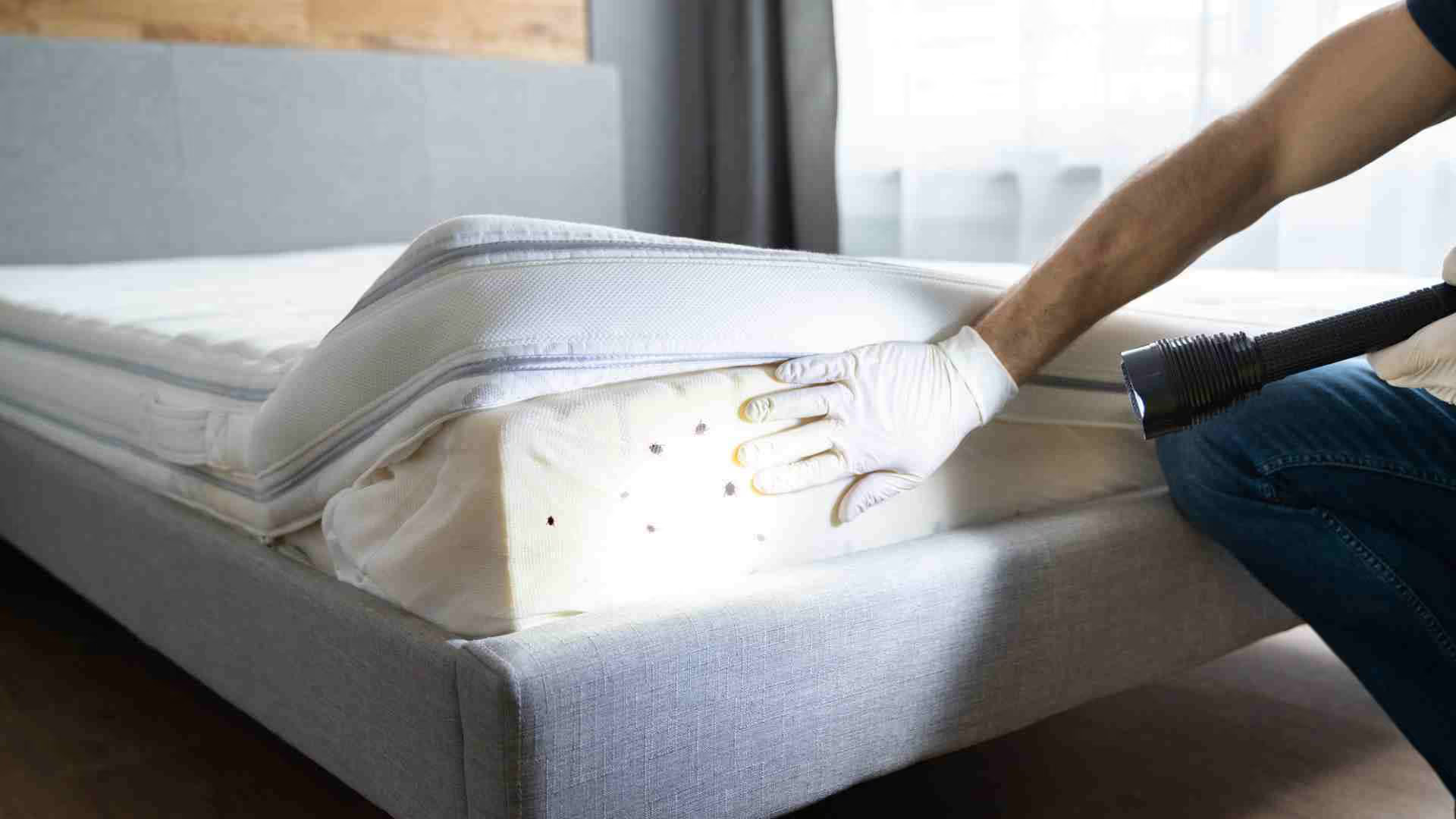
Where Bed Bugs Hide Besides the Mattress
Short answer: Look at the bed frame and headboard, other bedroom furniture, and anything you have travelled with. Photograph what you see, and leave walls, outlets and furniture assembled. Taking things apart can scatter bugs and is not needed to book an inspection.
According to HealthLink BC, bed bugs prefer places where they can hide and feed regularly, such as sleeping areas, and are found "under and behind all furniture, especially bedroom furniture, including mattresses and box springs". If you sleep on a couch, check that thoroughly too. Bed bugs can also hitch a ride on clothing, backpacks, luggage and books.
Places worth a careful look
| Where | What to look for | Leave alone |
|---|---|---|
| Bed frame and headboard | Dark spotting, shed skins or bugs in joints, slats and the back of the headboard | Do not unbolt or dismantle the frame |
| Nightstands, dressers and other bedroom furniture | The same signs under and behind each piece | Do not carry pieces to another room |
| Couches and upholstered chairs | Signs along seams, if anyone sleeps or rests there | Do not strip covers off or cut into them |
| Luggage, backpacks and bags | Seams and pockets, especially after a hotel stay | Keep them bagged rather than moving them around the home |
| Books and items kept next to the bed | Signs on covers and spines; see bed bugs in books and household items | Do not heat or spray them yourself |
| Electrical outlets, switch plates and wall edges | Look only at what you can see from outside | Do not open them. Bed bugs can shelter in wall cracks and behind loose faceplates, and opening live electrical fittings is a shock risk |
Use a flashlight and look rather than poke. You are looking for signs, not trying to flush anything out.
What counts as evidence
HealthLink BC lists dark spotting and staining on sheets, pillows, mattress, bed frame, carpets and clothing (from the bugs' feces and the blood from crushed insects), live or dead bed bugs, and their moulted skins. Bed bugs range from about 1 mm to 10 mm in size and from yellow-white to reddish-brown.
Bites are not on that list for a reason. HealthLink BC says some people have no reaction to bites at all, so bites alone neither confirm nor rule out bed bugs.
Record it before you clean
- Photograph each sign with something in the shot for scale, and note the room and the piece of furniture.
- If you find a live bug, tenancy advocates suggest sealing it in a plastic bag as proof (the Tenant Resource and Advisory Centre).
- Note the date, and keep a short list. An inspector can use it.
What not to do
- Do not take apart outlets, switch plates, walls or furniture. It is a reason to tell a technician, not to open them yourself. Disturbing wall voids can scatter bugs.
- Do not move things from the bedroom to other rooms, or to another home, to "get them away". Bag items and keep them sealed (see item care and preparation).
- Do not use sprays or home remedies on luggage or furniture. HealthLink BC says to use only products with a PCP number registered specifically for bed bugs, and to follow the label.
When to get it looked at
If you find live or dead bugs, shed skins or the dark spotting described above, a professional inspection will confirm what they are and where else they may be. Other small debris and insects can look similar, so a photo is useful when you ask. Bed bug removal in Vancouver begins with an inspection. Renters should tell their landlord in writing.
Free Pest Control Quote
A reply the same day, or within 24 hours if you call after hours.
Bed bug treatment starts from $495, depending on the work required.