
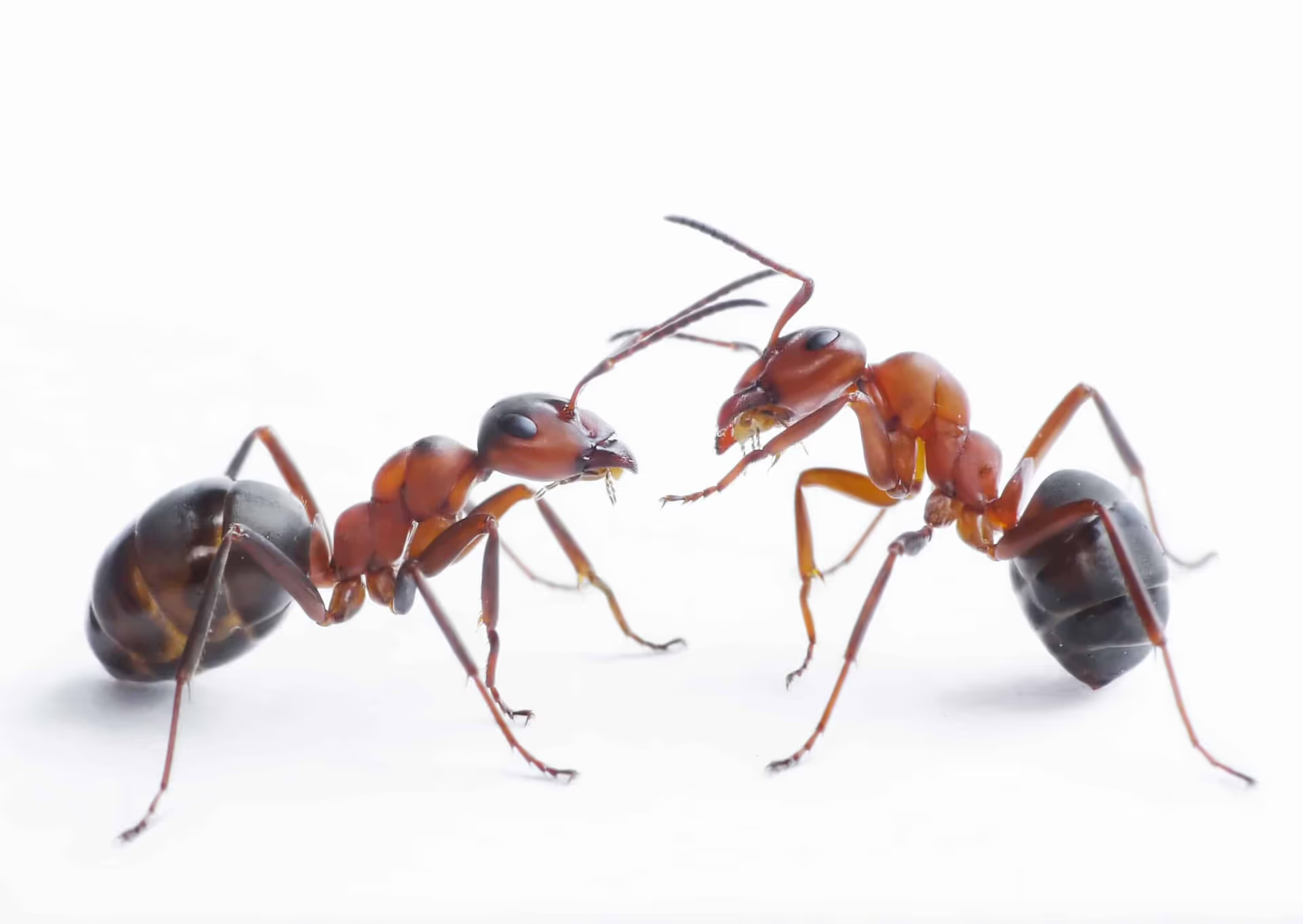
Household Ants: How to Tell the Common Types Apart
Short answer: Size, colour, the shape of the waist, whether the ant smells when crushed, and where it nests narrow it down to a likely type. Photographs and a sample often cannot confirm the species. If the ants are carpenter ants, which excavate wood and may signal damp or damaged wood, it is worth having an inspection.
Health Canada lists the ants that get into Canadian homes as carpenter, little black, odorous house, thief and pharaoh ants, with pavement ants as a nuisance in lawns, pathways and indoors. Most ants commonly found in Canada "are not aggressive, although some can sting". What you need to do depends mostly on which kind it is.
What to look at
- Size and colour. Compare to a coin or a ruler. Health Canada says ants are black, brown, red or yellow, from about 1 mm up to about 13 mm for most household ants; carpenter ants range from 6 mm to about 25 mm, with queens the largest.
- The waist. Ants have a thin waist with one or two small bumps on it, called nodes. The number and shape of the nodes help identify the species. They are hard to see without magnification.
- Smell. Crush one ant only if you are comfortable doing so. The odorous house ant smells like rotten coconut when crushed.
- Where they nest and where you find them. Under paving, in wood, in wall voids or in the kitchen.
- Whether the ants have wings. Winged ants are covered in our guide to flying ants.
Comparison
| Ant | Size and colour | Nodes | Clues | Where found |
|---|---|---|---|---|
| Carpenter ant | 6 to 25 mm; dark brownish-black, some with a reddish-brown body | 1 | Sawdust-like shavings; the wood is not eaten; may signal damp or decaying wood | Wood: stumps, logs, wall voids, doors, damp timber |
| Pavement ant | About 4 mm, dark brown-black | 2 | Mounds of soil along paving and slabs | Under paving, concrete slabs, in wall and floor voids |
| Odorous house ant | About 3 mm, brownish-black | 1 | Smell of rotten coconut when crushed | Under rocks and boards; indoors in rain and in the fall |
| Pharaoh ant | About 2 mm, yellow to reddish-brown | 2 | Colonies spread by "budding"; three-segmented antennal club | Voids in floors, walls and ceilings |
This table is general ant biology, so it narrows the field rather than naming your ant. Thief ants are very small (about 1 mm) and can look almost identical to pharaoh ants, and the difference needs magnification. Which of these you have in your Greater Vancouver home is a question an inspection can settle.
When identification needs a professional
- You think it may be a carpenter ant. Health Canada says carpenter ants are well known for their ability to damage wooden structures, and advises looking for piles of sawdust-like borings outside their galleries.
- You find tiny ants in the walls and kitchen and sprays have made them spread. Health Canada says spraying along trails can lead a colony to split into new colonies. Pharaoh ants are one to suspect: their colonies can be very large, and repellent sprays can make them split too.
- The ants return after you have cleaned up and sealed entries, or are in more than one room.
What you can do while you wait
- Store food in sealed jars or containers, wipe counters, and empty garbage often, as Health Canada advises.
- Seal cracks where ants enter, and note where the trail goes.
- Take a photograph with a coin for scale and collect one intact ant in a sealed container.
- Do not spray trails if you plan to use bait; Health Canada says chemical sprays make a bait system fail.
For carpenter ants specifically, see assessing carpenter ant wood damage. For general ant problems, Pesticon's ant control page covers the service, and its pavement ant page and carpenter ant page cover those.
Free Pest Control Quote
A reply the same day, or within 24 hours if you call after hours.