
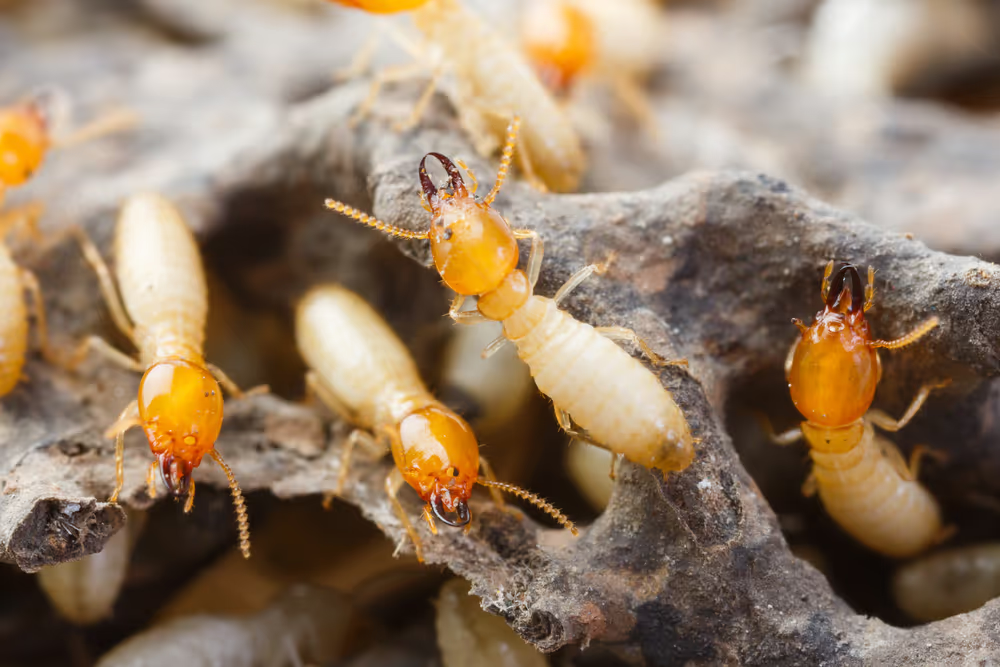
How Quickly Can Termites Damage Your Home?
Short answer: It depends, and no article can give you a reliable timeline for your house. Speed depends on the species, how wet the wood is, how large the colony is, and how much wood it can reach. What you can do is find out whether the changes you have noticed are caused by termites at all, and whether anything is still active.
What affects the pace
- Moisture. Termites need it. Pacific dampwood termites live in wood that is already wet, and western subterranean termites need a moisture route, usually through soil. Wet wood and leaks make a building more attractive to both. See the UBC e-fauna notes on BC termites.
- Species. The two coastal species live differently: UBC notes that the subterranean termite builds earthen tubes to keep its galleries moist, while the Pacific dampwood termite needs damp wood and builds no tubes. One damage story does not fit both.
- Colony size and age. A mature colony can feed more than a young one, but you cannot count a colony from outside the wall.
- Access to wood. Untreated timber near soil or a leak gives them more to work with.
Numbers quoted online for how much wood a colony eats, or how many termites a colony holds, mostly come from other regions and species, so treat them with caution.
Signs that suggest termites
- Mud tubes on foundation walls, piers or crawlspace posts.
- Discarded wings near windows or sills.
- Wood that sounds hollow, or that a screwdriver pushes into easily.
- Blistered paint, sagging or swollen floors, or doors and windows that suddenly stick.
Several of these also come from plain water damage or rot, which is why a photograph is a starting point and not a diagnosis.
What to photograph
- The affected spot with something in the frame for scale, such as a coin or ruler.
- A wider shot showing where it is in the room or foundation.
- Any tubes, wings or pellets, left where you found them.
- Nearby sources of moisture, such as a leak, a downspout or a damp patch.
- The date, and whether the change is getting bigger.
What a pest assessment can and cannot do
A pest assessment can identify the insect, find where it is active and look for the moisture behind it. It cannot date the damage from a photograph, and it is not a structural engineering assessment. If wood is soft in a load-bearing area such as a sill, post or joist, ask a building professional about the structure as well.
When to act promptly
Book an assessment soon if you find active signs, such as fresh tubes or swarming insects, or if wood is damaged near the foundation. If you have a single old-looking gnawed beam and no other sign, it is still worth identifying, but it is less urgent than active insects.
Our termite service in Vancouver begins with an inspection. Call (604) 229-1097 (8 AM to 8 PM, Monday to Sunday) or ask for a .
Free Pest Control Quote
A reply the same day, or within 24 hours if you call after hours.