
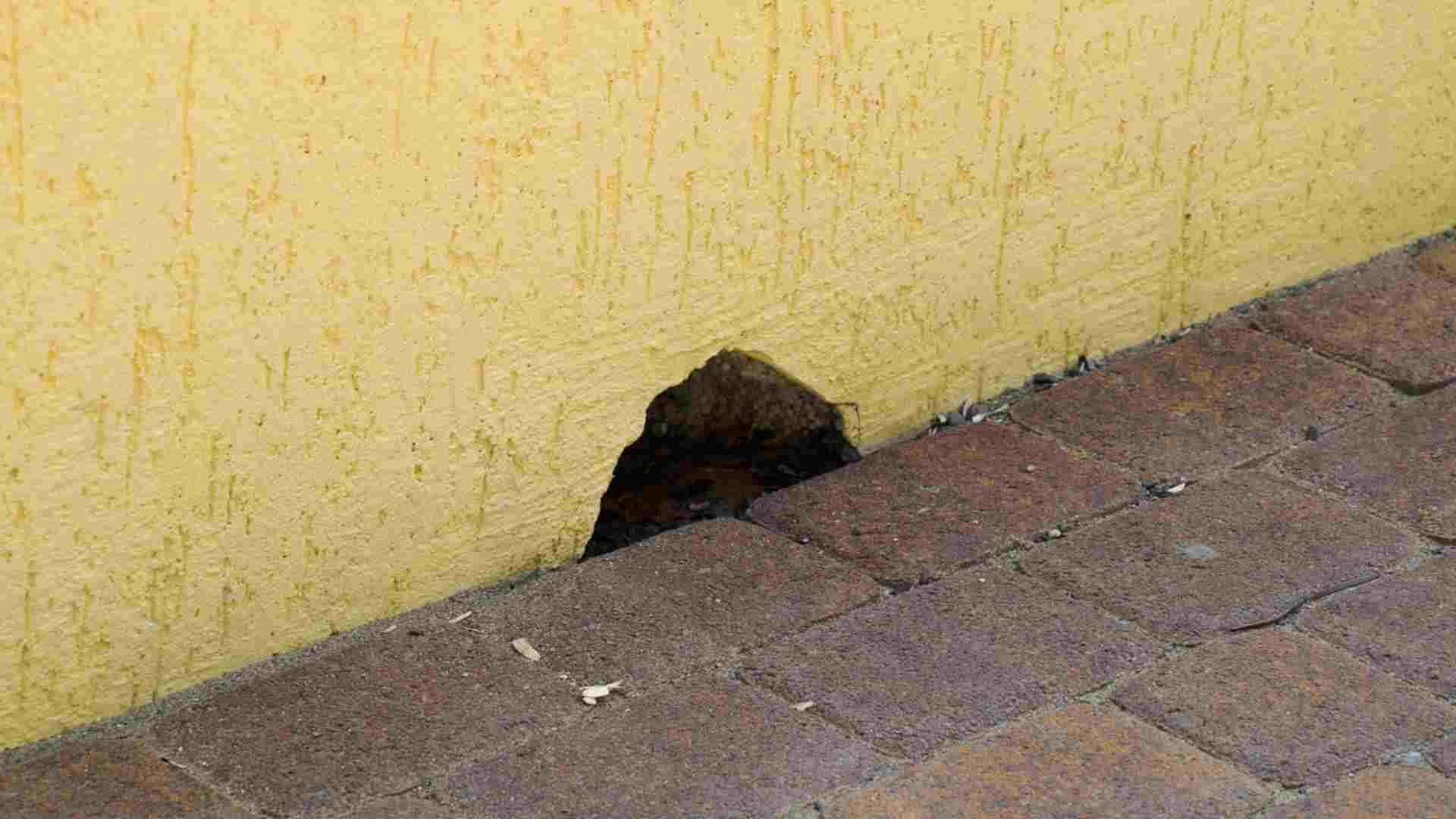
Mice or Rats in Your Walls? How to Read the Noise and When to Get an Inspection
Short answer: Scratching in the walls at night is a common sign of mice or rats, but sound alone does not prove it. Look for droppings, gnaw marks or rub marks before you act. If droppings or nests are inside the wall, in insulation or in a crawl space, or you cannot find how they get in, have it inspected rather than disturbing it yourself.
- Health Canada lists "scampering and scratching sounds in the walls of your home at night" as a sign of an infestation. It is a sign, not a diagnosis.
- Where you hear it is a clue at best. A sound inside a wall does not tell you exactly where a nest is.
- Do not sweep or vacuum droppings. Follow HealthLink BC's clean-up steps below, and have droppings or nests in insulation or wall cavities assessed first.
- Inside a house, traps are a better first choice than poison, because a poisoned rodent can die where you cannot reach it.
- Control only lasts once the entries are sealed. Mice can squeeze through a gap the size of a dime and rats through one the size of a quarter (Health Canada).
What does scratching in the walls at night usually mean?
Most often mice or rats. Health Canada names scratching and scampering in the walls at night as a sign, and the City of Vancouver notes that rats and mice are typically more active at night. HealthLink BC adds that when the house is quiet you may hear them moving between walls, in attics and under foundations, or chewing.
A sound on its own does not prove it. Check for the other signs the City of Vancouver lists:
- droppings and urine stains
- gnaw marks and chew marks
- rub marks (dark, greasy smears along regular routes)
- runs and tracks in dust
- nests and burrows
Heavier noises from a roof space can come from larger animals such as raccoons or squirrels, which need a different approach (see raccoons and squirrels in attics). For a fuller list of what to look for, see signs of mice at home or work.
Evidence first, then the inspection decision
Use this sequence:
- Listen and log. Note the date, time, how long and where in the house. Several nights of the same noise is stronger than one.
- Look for a second sign. Droppings, gnawing, rub marks or tracks near the wall, or in the cupboards and utility areas next to it.
- Photograph, do not handle. Put a coin beside droppings for scale. The size can help identify the animal (see mice versus rats).
- Check where it could be getting in. See where mice and rats get in.
- Decide. Noise only, no other sign after a week: keep listening and keep the log. A second sign, or a sign in more than one place: look for the entry. Droppings or nests inside the wall or roof space, or activity you cannot trace: ask for an inspection.
Rodents move inside wall cavities, so the noise may not come from where the nest is. Treat any wall noise as a starting point, not a diagnosis.
Is it safe to clean up droppings yourself?
For a few droppings in a living space, HealthLink BC sets out a method you can follow. Its file on hantavirus says that in Canada the virus has been found only in wild mice, specifically the deer mouse, and that house mice, roof rats and Norway rats are not known to spread it. The precautions still apply, because the illness is serious.
Following File #37 (updated 31 January 2024):
- Air an enclosed area for 30 minutes first.
- Wear a well-fitting filter mask, rubber gloves and goggles.
- Pour disinfectant gently over the droppings; do not use a sprayer. A general-purpose household disinfectant works, or 1 part bleach to 10 parts water.
- Do not sweep or vacuum.
- Double-bag the waste, seal it and dispose of it according to local by-laws.
If droppings or nests are spread through attic insulation, a crawl space or the inside of a wall, do not disturb them yourself. Have the area assessed first.
Traps or poison for rodents in walls?
Inside a home, start with traps.
- Traps work when placed well. Health Canada says snap traps and electronic traps "are easy to use and very effective if well positioned and set properly", and that every type should be checked daily. If they are being ignored, see why traps are not working.
- Poison has a particular downside in walls. HealthLink BC says it is not a good idea to use poison baits, because poisoned rodents can crawl away and die where you cannot find them, which causes odours. In a wall cavity that is hard to fix.
- Bait is never the whole answer. Health Canada says baits should not be the only method and must be in a tamper-proof station anywhere children or pets can reach. See rodent poison and pets.
- One class of poison is restricted in BC. Since 21 January 2023, the Province of BC says second-generation anticoagulant rodenticides can be used only by essential services and the licensed pest control companies they hire. Homes are not on the essential services list.
Getting rid of them for good: seal the entries
Removal lasts only if they cannot get back in. Once the animals are gone, check the outside of the house for:
- openings wider than 6 mm (1/4 inch), which HealthLink BC says to seal
- door thresholds and jambs: Health Canada notes that even a small gap under a worn threshold lets mice in
- the line where siding meets the foundation, and foundation cracks
- crawl space openings and vents; HealthLink BC recommends 6 mm (1/4 inch) metal screening or steel mesh
- the roof, if you suspect roof rats (see roof-level signs)
The City of Vancouver also suggests sheet metal kick plates on exterior doors and metal flashing between the foundation and the ground.
Then take away what drew them in. The City's list includes garbage in cans with tight lids, fallen fruit and nuts and spilled bird seed cleared away, leftover pet food cleaned up, leaks repaired, firewood stored away from walls and off the ground, and shrubs and mulch moved back from the foundation.
Renting in Vancouver? Who deals with rodents in the walls
Under the City of Vancouver's guidance, a tenant with rodents in the home should contact the landlord first. If the landlord does not help, the tenant can report the problem to the City online. For landlords, the City's advice is to contact a pest control company.
Who is responsible depends on local rules. The Province of BC's repairs and maintenance guidance says municipal standards of maintenance bylaws decide whether the landlord is responsible for pests such as rodents, and that tenants must request repairs in writing. Disputes go to the Residential Tenancy Branch. This is general information, not legal advice.
When should you call a professional?
HealthLink BC advises contacting a licensed pest control company if you cannot control rodents on your own. Ask for an inspection if:
- you cannot find the entry points, or they are on the roof or high on the house
- droppings or nests are spread through insulation or inside the walls
- you hear activity in more than one part of the house
- you have already trapped and sealed and the signs return
Whoever you hire, ask whether the visit covers the whole house and its entry points, not just bait in the kitchen. Pesticon's mice control page explains how to request an inspection. Bring your photos and your noise log.
Frequently asked questions
What could be causing noises in my wall at night? Usually a mouse or rat moving, nesting or gnawing in the cavity, since both are most active after dark. Confirm with droppings, gnaw marks or rub marks before you treat, because larger animals in a roof space can also make noise.
Will mice in walls leave on their own? Do not count on it. Health Canada advises tackling occasional invaders right away to avoid a severe infestation. Trap them, find and seal the entry, and remove the food and shelter that drew them in.
Can mice or rats damage the inside of walls? Yes. HealthLink BC notes that rats and mice chew on building materials, including insulation, siding, wallboard and wires. When you seal entries, check for chewed insulation and wiring as well.
Can I put rat poison inside my walls? It is not a good idea, for the reasons above.
Free Pest Control Quote
A reply the same day, or within 24 hours if you call after hours.