
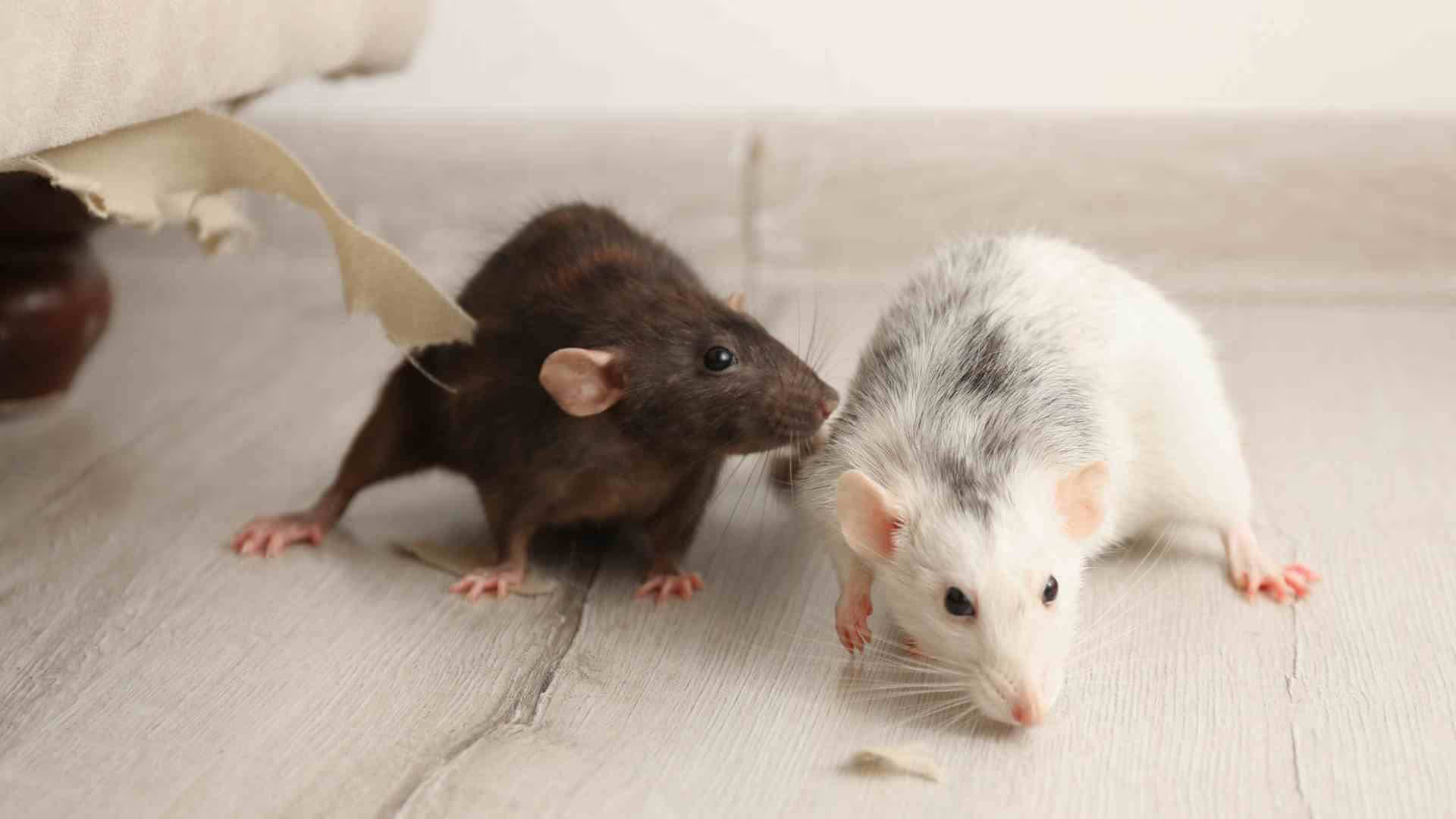
Mice or Rats? How to Tell Which You Have, and What to Tell a Technician
Short answer: Droppings are the most practical clue you can safely photograph. HealthLink BC gives about 6 mm (1/4 inch) for mouse, 13 mm (1/2 inch) with pointed ends for roof rat, and 19 mm (3/4 inch) with blunt ends for Norway rat. Size, location and noise help, but none proves the species on its own.
Knowing which rodent you have changes the traps you use and where you look for entry. It also changes what you tell a technician. You do not need certainty; a good set of photos and notes is enough.
The three rodents found in the Vancouver area
The City of Vancouver lists three as common: the Norway (brown) rat, the roof (black) rat and the house mouse. Its comparison gives typical weights of about 280 to 480 g (10 to 17 oz) for a Norway rat, 230 g (8 oz) for a roof rat and 20 g (¾ oz) for a house mouse.
| Compared | House mouse | Roof rat | Norway rat |
|---|---|---|---|
| Typical weight | about 20 g (¾ oz) | about 230 g (8 oz) | about 280 to 480 g (10 to 17 oz) |
| Droppings | about 6 mm (1/4 in), oval | about 13 mm (1/2 in), pointed ends | about 19 mm (3/4 in), blunt ends |
| Where it tends to live | Close to food, in corners and cupboards | Above ground: roof spaces, trees, dense vegetation | Low: burrows, basements, crawl spaces |
| Gnaw marks | small, "scratchy" about 2 mm | larger, about 4 mm | larger, about 4 mm |
Treat the table as a starting point. A young rat can look like a large mouse, and droppings from a mouse and a small rat can overlap in size.
Clues you can use without touching anything
- Droppings. Photograph them next to a coin. Do not pick them up, sweep them or vacuum them. If you need to clean them, follow the steps in HealthLink BC File #37.
- Where the signs are. Evidence high up (attic, ceiling, upper wall) fits a roof rat or mouse; evidence low (basement, crawl space, burrows outside) fits a Norway rat, although all three can turn up anywhere.
- Gnawing. Rats leave larger tooth marks than mice. Compare to a coin or a ruler.
- Rub marks. Greasy smears on walls show a regular route and are more likely to be rats, but a mouse leaves them as well.
- Noise. Weak evidence. Rodents move inside walls, so a sound does not mark the nest. See mice or rats in your walls.
What cannot be told from a photograph
- A single dropping or mark. You need several.
- Roof rat versus Norway rat from droppings alone when sizes sit near the limits.
- Whether the activity is current. See signs of mice at home or work.
- Whether the animal is a rodent at all. Squirrels, raccoons and other animals leave different droppings.
Never handle droppings or animals to identify them. Health Canada says "never sweep or vacuum dry droppings. The dust that is raised can cause illness."
Why it matters for your response
Health Canada says traps have to suit the animal: "a rat trap is too large to kill a mouse." Roof-level activity points to a different entry (see roof-level signs) than a burrow at the foundation. If you are not sure, hold off on traps and baits until you have looked at the pattern of evidence.
What to tell a technician
Collect this before you call:
- Dated photos of droppings (with a coin for scale), gnaw marks and any damage
- Where each sign is, and the floor or area (basement, kitchen, attic)
- When you notice it (night, morning), and for how long
- What you have already tried (traps, bait, sealing), and what happened
- Whether children or pets are in the home, or whether it is a business
Pesticon's mice control page explains how to request an inspection.
Free Pest Control Quote
A reply the same day, or within 24 hours if you call after hours.