
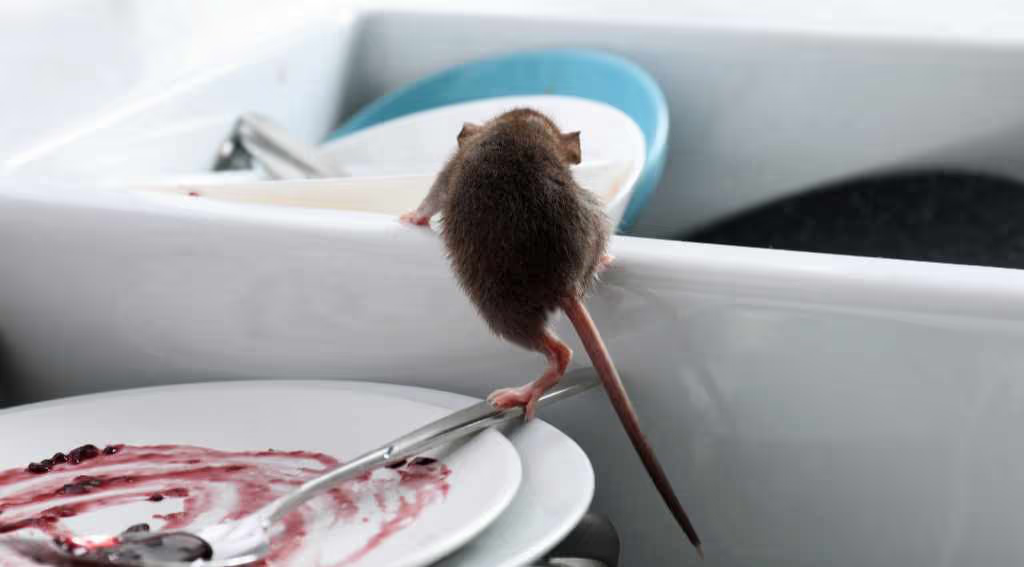
Signs of Mice at Home or Work: What to Look For and What It Means
Short answer: Fresh droppings, new gnaw marks or tracks that come back after you clean them point to active mice. One old dropping or a single noise does not. Keep a simple log for a week and you will know which one you have.
Most people find out about mice by accident: a dropping behind the toaster, a torn bag of rice, a scratch in the wall at night. The question that follows is whether this is a mouse living in the building or a one-off. These ten signs, and the way you read them, help you decide.
How to tell fresh activity from an old sign
A sign counts as active when it is new and it repeats. Clean it up (safely, see below) and look again over the next several days:
- Droppings that come back in the same place after you have cleaned them are recent.
- Tracks in dust come back overnight. A light dusting of flour or talc on a hard floor, left in a quiet corner, shows whether anything crosses it. Check it the next morning, and do not leave it where pets or children can reach it.
- Noises happen on several nights, not one.
- Damage is new. Mark the edge of a gnaw mark with a pencil line and see whether it grows.
An isolated, old sign is still worth a note, but monitoring is a reasonable response. Several signs together, or a sign that keeps coming back, is the point to look for how they are getting in.
The ten signs
1. Droppings
Mouse droppings are small and oval. HealthLink BC puts them at about 6 mm (1/4 inch) long, and describes rat droppings as larger: about 13 mm for the roof rat and 19 mm for the Norway rat. Look along baseboards, inside cupboards and drawers, under sinks and behind appliances.
Photograph them, do not handle them. Put a coin or ruler beside the droppings so the size is clear. Never sweep or vacuum dry droppings: Health Canada warns that the dust raised "can cause illness". Cleaning steps are in the box below.
2. Gnaw marks
Look for small, rough-edged grooves in wood, packaging and soft plastic. Gnawing on its own does not tell you which animal did it, so look for a second sign nearby.
3. Nests
Mice shred soft material (paper, fabric, insulation) into a loose ball tucked into a quiet, sheltered spot. Do not break a nest apart to see what is inside. Note where it is and, if you can, photograph it from a distance, because a nest in insulation or a wall cavity needs assessing before it is disturbed.
4. Scratching or scampering at night
Health Canada lists "scampering and scratching sounds in the walls of your home at night" as a sign. Sound alone is weak evidence: pipes, settling timber and other animals can all make noise. A noise matters most when it matches another sign. If the noise is your main clue, see Mice or Rats in Your Walls?.
5. Dark, greasy rub marks
Rodents tend to run the same routes along walls, and their fur can leave dark smears at corners and entry gaps. Marks like this suggest a regular route, not a new visitor. Dirt and hand marks look similar, so treat them as supporting evidence only.
6. Tracks and tail marks
In a dusty basement, attic or storage shelf, small prints and a thin drag line can show where something travels. Photograph them with a coin for scale before you walk through the area.
7. A stale, ammonia-like smell
A persistent smell in an enclosed space can come from urine and nesting material. Odour is a weak sign by itself, since damp, drains and food waste smell too. It is most useful when it is strongest where you have also found droppings.
8. Chewed food packaging
Torn cereal boxes, bags of flour and pet food with small bite holes are a common first clue. Note which items were opened and where they were stored.
9. A pet fixated on one spot
Cats and dogs sometimes sniff or paw at one wall or appliance repeatedly. It is a hint, not proof. Use it to decide where to look, not as a finding.
10. A live or dead mouse
Seeing one is real evidence that a mouse was in the building. It does not tell you how many there are. If you find a dead one, wear gloves, seal it in two bags and wash your hands afterward; do not touch it with bare hands.
Safe clean-up for droppings
Following HealthLink BC File #37 (last updated 31 January 2024):
- Air out an enclosed area for 30 minutes first.
- Wear a well-fitting filter mask, rubber gloves and goggles.
- Pour disinfectant gently over the droppings. The file says not to use a sprayer, and to use a mix of 1 part bleach to 10 parts water or a general household disinfectant.
- Do not sweep or vacuum.
- Put the waste in two sealed bags and dispose of it according to local by-laws.
If droppings or nests are spread through insulation, a crawl space or a wall cavity, have the area assessed rather than cleaning it yourself.
Keep a one-week observation log
A short log makes it easy to see whether activity is continuing and where. Record, each day:
- Date and time you noticed it
- Where: room, wall or appliance
- What: droppings, noise, gnaw marks, tracks or something else
- New or repeat: is it in a place you already cleaned or marked?
- Photo taken: yes or no
Add a rough floor plan with the locations marked. If you later ask for an inspection, this log tells the technician where to start and how long it has been going on.
What to do with what you find
- One old or isolated sign, nothing since: keep watching for a week or two and store food in sealed containers.
- Repeat signs, or signs in more than one place: look for how mice are getting in. Mice can squeeze through a gap about the width of a dime, and HealthLink BC advises sealing exterior openings larger than 6 mm (1/4 inch). Our guide to rodent entry points shows where to check.
- Signs you cannot reach, a nest in a wall or roof space, or activity that keeps returning after you have sealed and trapped: have it inspected. Pesticon's mice control service is the place to start, and your photos and log are the best thing you can bring.
- A business that handles food: keep the same log and photos, and see rodent evidence in a business.
If you are unsure whether the animal is a mouse or a rat, read mice versus rats.
Free Pest Control Quote
A reply the same day, or within 24 hours if you call after hours.