
Hornet-Like Insects Around Your Property: Foraging or a Nest?
An occasional large wasp on a flower or a food scrap is foraging. A steady stream flying to and from one place is likely heading to a nest. Identify first and keep your distance; do not try to swat, vacuum or trap them.
What "hornet" often means in BC
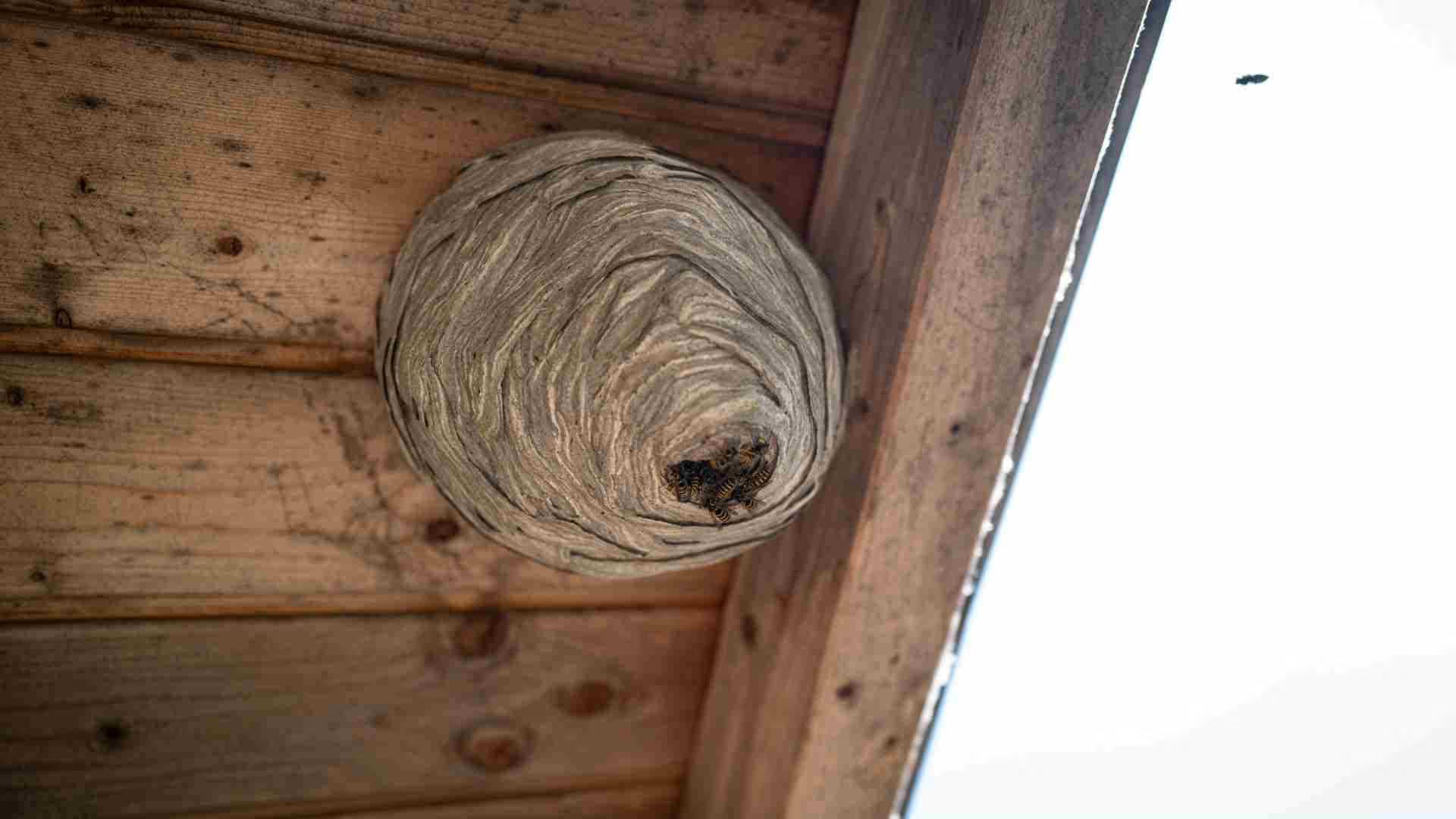
Most "hornets" seen in BC are native insects. The BC government pest alert lists the bald-faced hornet, yellowjackets, the horntail wasp and the elm sawfly as large native insects that could be mistaken for the Asian giant hornet, with no need to report them. Simon Fraser University groups the bald-faced hornet with the aerial yellowjackets, which nest in exposed places such as eaves or tree branches. SFU also notes that the European hornet, a true hornet, is established in eastern North America.
The Asian giant hornet (Vespa mandarinia) was first found in BC in Nanaimo in August 2019, when a single nest was located and destroyed; specimens were later found in the Fraser Valley. The alert describes the insect as the largest hornet in the world, with a body length of up to 5 cm and a distinct shield-shaped head, and says it builds its nest in the ground. If you think you have seen one, photograph it from a distance and report it to the Invasive Species Council of BC at 1-888-933-3722 or bcinvasives.ca/report.
Foraging or a nest?
| Foraging | Nest nearby |
|---|---|
| One or two insects at a time | Several, in a steady stream |
| Random directions, visits food or flowers | Same flight path to and from one point |
| Gone when food is removed | Continues without food |
What to observe, from a distance
- Where they land and where they leave to.
- Whether you see a paper nest, a hole in the ground or a wall or roof gap with traffic.
- Time of day. Take photos with zoom.
What attracts them
Food left out (SFU notes that some yellowjackets scavenge meat at picnics), uncovered garbage, and sheltered nesting sites such as eaves, tree branches, cavities and ground holes. Covering food and bins reduces visits.
What not to do
Do not use a swatter, vacuum, spray or trap near a suspected nest, and do not block an entrance. Disturbed nests are defended.
When to get it assessed
A confirmed nest, traffic to a hole near the house, anyone stung repeatedly, or anyone who may be at risk of a serious sting reaction (call 9-1-1 for trouble breathing). See our hornet control service in Vancouver.
General information, not medical advice. For a sting, bite or exposure reaction, call HealthLink BC at 8-1-1, or 9-1-1 in an emergency.
Free Pest Control Quote
A reply the same day, or within 24 hours if you call after hours.