
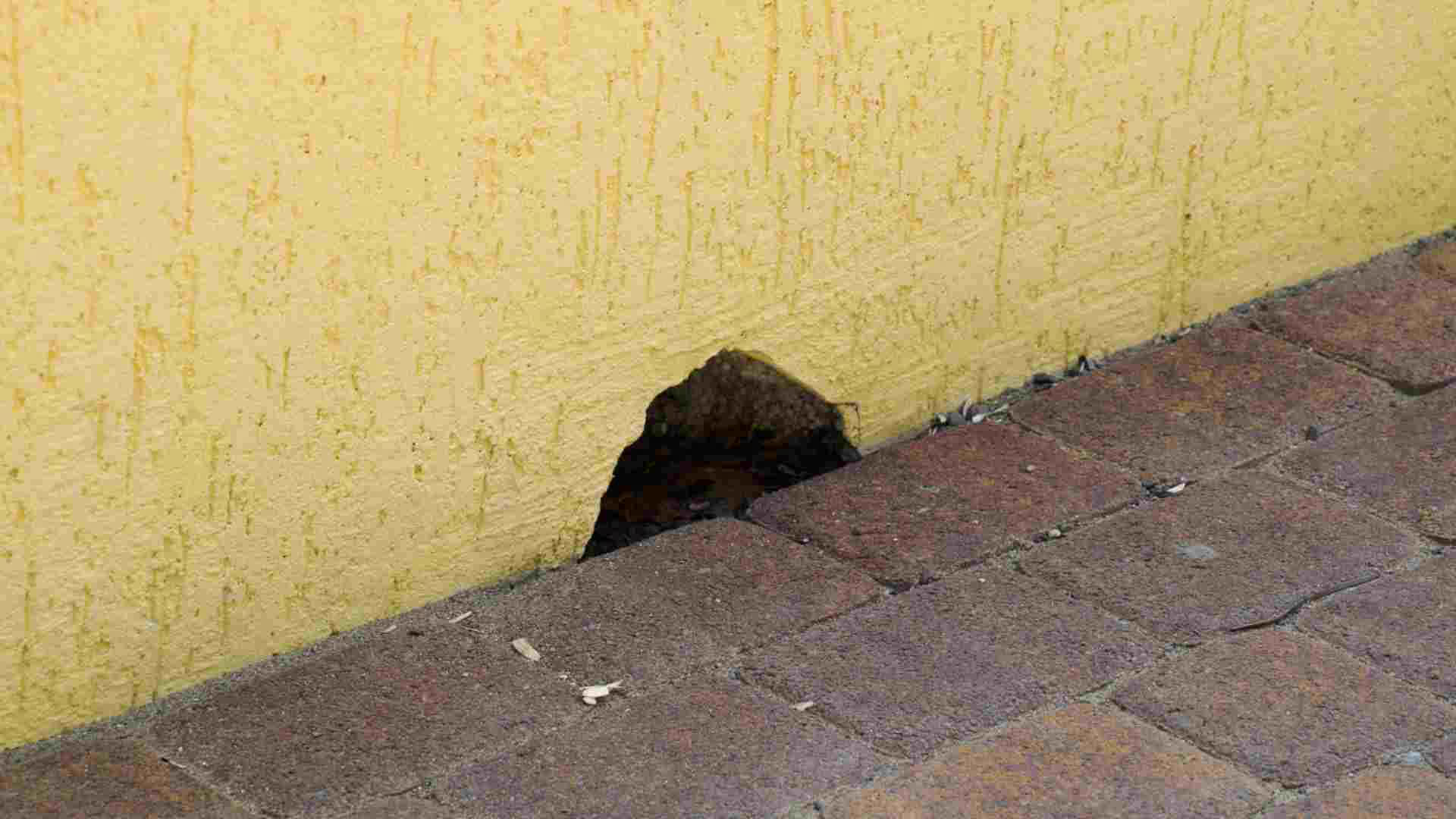
Where Mice and Rats Get In: Entry Gaps to Check and When to Call
Short answer: Mice can squeeze through a gap about the size of a dime and rats through one about the size of a quarter, so the entry is usually smaller than you expect. You can check the accessible parts of a house yourself. Roofs, chimneys, vents and any opening where an animal may still be living should be assessed first, not sealed.
Sealing a gap closes the route in. It does not remove the animals already inside, and sealing a live entry can trap them in the walls. That is why the order matters: find the entries, decide which you can safely check, and only then repair them.
How small a gap is
Health Canada says "mice can squeeze through cracks as small as a dime, while rats can enter through a quarter-sized hole." HealthLink BC advises sealing any exterior opening larger than 6 mm (1/4 inch). A gap you would not notice on a normal walk-around can be enough.
Accessible checks you can do from the ground and indoors
Work in daylight with a torch, and take photos of what you find with a coin or ruler for scale.
| Where to look | What counts as a possible entry |
|---|---|
| Foundation and the line where siding meets it | Cracks, and gaps at the joint; HealthLink BC names both |
| Exterior doors | Worn thresholds and door bottoms where daylight shows under the door |
| Where pipes, cables and gas or dryer lines enter | Gaps around the penetration, often left after the installation |
| Vents and crawl space openings | Missing, loose or torn screens; HealthLink BC recommends 6 mm (1/4 inch) metal screening or steel mesh |
| Garage door and its seals | Worn rubber at the corners and bottom |
| Inside: under sinks, behind the stove and in utility cupboards | Gaps around pipes, with droppings or gnaw marks nearby |
Gaps versus rodent entries
A gap is only a possible entry. Signs that rodents are using it include:
- smudged, greasy marks along the edges of the opening
- fresh droppings or gnawing at or near it
- gnawing that has enlarged a hole, or shredded material pulled to the edge
- dirt worn smooth in a path leading to it
Ordinary wear (weathering, settling, a dried-out caulk line) looks cleaner and has none of these marks. If you cannot tell, photograph it and treat it as a possible entry.
Which entries to leave to a professional
Some entry points are not safe or sensible for a homeowner to deal with:
- Roofs, chimneys and roof vents. Working at height is a fall risk, and these can be common routes for roof rats. See roof-level rodent signs.
- Any entry that may be occupied. If you are hearing or seeing activity, blocking the hole can trap animals indoors, where they may die in a place you cannot reach. HealthLink BC also warns that poisoned rodents can die where you cannot find them, and Health Canada says baits should not be the only method.
- Vents and exhaust ducts. The cover must keep rodents out without blocking airflow, which matters for dryer and heating vents.
- Large or structural gaps. These need a repair, not a patch.
For these, an inspection gives you a map of the entries. Pesticon's mice control page explains the service.
Materials that rodents do not chew through easily
Health Canada suggests stuffing steel wool around pipes before caulking, fitting metal weatherstripping along door bottoms, filling foundation cracks, and covering dryer vents, attic vents and soffits with fine metal screening.
Do not use poison as an alternative to sealing. Health Canada says baits or poisons should not be the only method.
Why mice keep coming back after you seal
Entry is only half of the picture. Mice stay where they find food, water and shelter. Health Canada's list is practical: keep garbage in bins with tight lids, store dry food and pet food in glass or metal containers, fix leaks, clear clutter, raise woodpiles about 30 cm (1 foot) off the ground and away from the house, and keep grass short.
Outdoors, it also helps to cut back shrubs and mulch from the foundation and keep clutter out of the garage and basement; the City of Vancouver gives the same advice.
A short checklist
- Walk the outside and note every gap larger than 6 mm. Photograph them.
- Look indoors at pipe entries and utility cupboards.
- Look for fresh signs at each gap (droppings, gnawing, smears).
- Check the food and waste around the house.
- Seal the gaps you can reach safely, once there is no sign anything is inside.
- Book an inspection for roofs, chimneys, vents and any entry that looks active.
For the signs that tell you activity is current, see signs of mice at home or work.
Free Pest Control Quote
A reply the same day, or within 24 hours if you call after hours.