
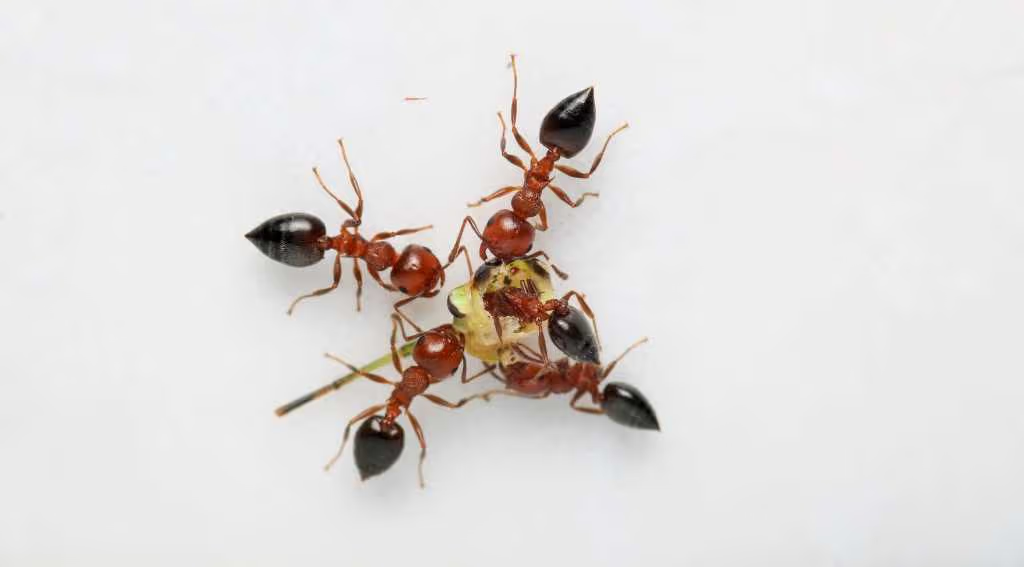
Suspected Carpenter Ant Damage: What to Look For and Who to Call
Short answer: Carpenter ants excavate wood to nest, usually wood that is already damp or decaying. Piles of sawdust-like shavings and slit-like openings suggest them. A pest inspection can say whether ants are active and where. It cannot judge whether a beam is safe to carry load. If wood is soft, sagging or structural, ask a structural professional.
Carpenter ants do not eat wood. Health Canada says it is "not eaten, but thrown from the nest as sawdust-like shavings". The damage is in the galleries they cut, and it is usually worst where moisture has already softened the wood.
Signs that point to carpenter ants
- Sawdust-like shavings (often called frass). Health Canada says to look for "piles of sawdust-like borings outside their galleries and slit-like openings in woodwork." Piles are most likely to appear under the opening.
- Smooth, clean galleries. In general, the University of Maryland describes carpenter ant excavations as sandpaper smooth and clean, unlike termite galleries, which are packed with mud and excrement. You will not see that without opening the wood, which is a job for a professional.
- A dry rustling noise in a wall, best heard at night (Health Canada).
- Ants in the same place repeatedly, such as under the kitchen sink, and trails leading out to a nest (Health Canada).
- Winged ants indoors. See winged ants versus termites.
Signs that are not proof
- Hollow-sounding wood. In general, Colorado State University lists hollow-sounding wood as something that may indicate a problem, but it is not a diagnosis. Decay, termites and other causes sound hollow too.
- A single ant. Carpenter ants forage outdoors. One ant indoors can be a wanderer.
- Soft wood on its own. It may be rot with no ants at all.
What else can look similar
| Cause | What distinguishes it |
|---|---|
| Carpenter ants | Clean, smooth galleries; sawdust-like shavings; ants active, often at night |
| Termites | Galleries packed with mud and excrement; winged termites have straight antennae and a thick waist |
| Wood rot (decay) | Soft, spongy or crumbling wood from moisture, often without galleries |
| Other wood-boring insects | Can look similar to the untrained eye; ask for identification before any treatment |
If you are not sure which it is, leave the wood alone and photograph it. Termites call for a different approach; see Pesticon's termite control page.
Where moisture and nests tend to be
Carpenter ants prefer moist, decaying wood, so Health Canada says their presence "can signal a moisture problem". In general, Penn State Extension says nests inside a home may come from a parent colony outdoors, often in a tree, log or waste wood within about 90 m (100 yards) of the house, with a satellite colony inside. They also nest in wall voids, attic spaces and hollow doors (Health Canada). Common places to check:
- around windows and door frames
- under sinks and around plumbing
- basements and crawl spaces
- roof edges, gutters and chimneys
- wood that touches soil, and stored firewood
Safe evidence to collect
- Photograph shavings, openings and the surrounding wood with a coin for scale. Photograph any leaks or staining.
- Collect one intact ant in a sealed container, if you can do so safely.
- Note the date, time and location of any activity, and whether it is at night.
- Do not pull out damaged wood or drill into walls. You may spread ants and you may weaken the structure.
- Do not stand on or load wood you suspect is damaged.
Pest inspection and structural assessment are different jobs
- A pest inspection can look for signs of carpenter ants, identify the insect, trace the likely nest and moisture, and recommend treatment.
- A structural assessment is for whether the wood still does its job. Ask a structural engineer, a building inspector or a qualified contractor if wood is soft, sagging, cracked or supporting load. A pest inspector's finding of ants is not a statement about structural safety.
Treating the ants does not repair the wood. Damaged wood needs repair or replacement by a qualified person, and the moisture that caused it needs fixing, or the problem can come back. See five mistakes that keep carpenter ants coming back and the aftercare checklist.
Who to call, in order
- Signs of ants, no structural concern: a pest control company. Pesticon's carpenter ant control page explains how to ask.
- Moisture or a leak: a plumber or roofer, and fix it.
- Soft, sagging or load-bearing wood: a structural professional.
- Not sure what the insect is: ask for identification before treatment.
Free Pest Control Quote
A reply the same day, or within 24 hours if you call after hours.