
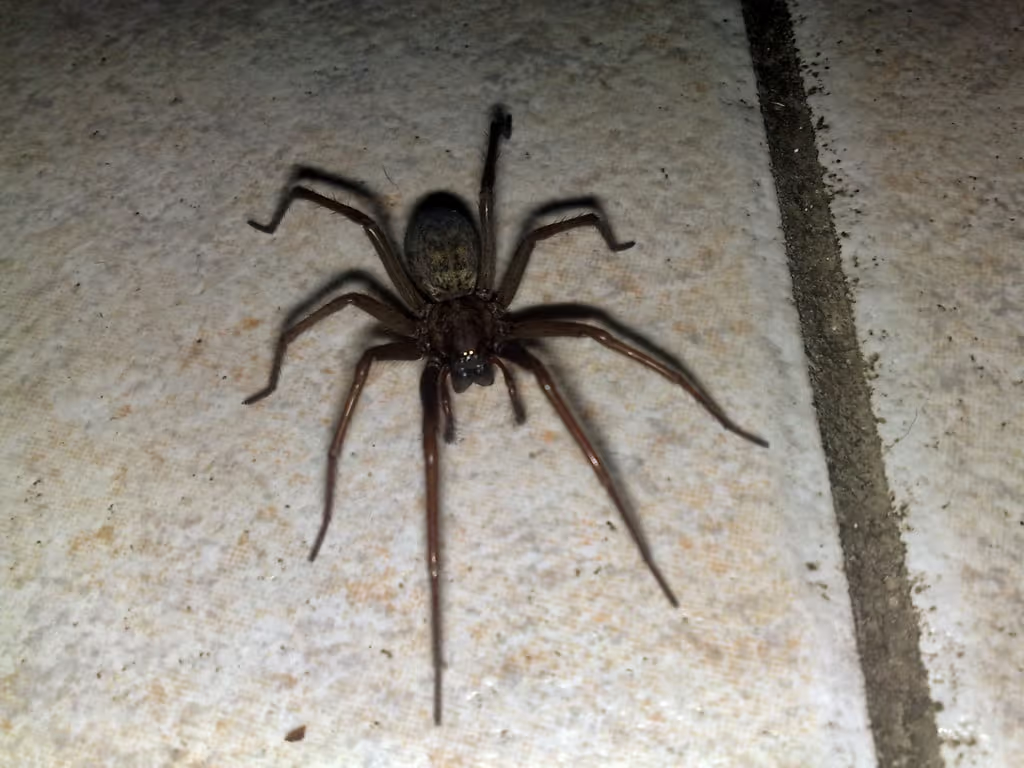
Giant House Spiders in BC: Identification and When to Act
Short answer: A large, fast, brown spider on your floor in late summer is often one of the giant house spiders, which the Burke Museum notes are mature at that time of year. One or two sightings in that season usually need no treatment. Recurring sightings in the same place, many egg sacs, or a spider you cannot identify are better reasons to look closer or call.
Why they show up in late summer
The Burke Museum's spider myths pages explain that house spiders usually spend their entire life cycle in, on or under the building, and do not come in from the cold. When many appear at once, it is usually late summer (August and September), and what you are seeing is sexually mature males wandering in search of mates. A few sightings in that season do not mean an infestation.
Telling them apart
Spiders are hard to identify from a distant photo, and size can mislead. Use these as a guide, not a verdict.
| Spider | What you might see | Where |
|---|---|---|
| House spiders, including the giant house spiders | Large, brown, long legs, fast over short distances; webs where insects collect | Ceilings, corners and basements |
| Hobo spider | Looks much like a house spider, so leave the identification to an expert. The Burke Museum says it is not a true house spider and cannot live permanently in buildings; the ones found indoors are generally wandering males | Mostly outdoors |
| Wolf spider | Fast-moving ground spider | Garages, crawl spaces and storage areas |
| Cellar spider ("daddy long legs") | Loose webs | Damp areas such as basements and utility rooms |
If you cannot place a spider, catch it under a glass and take a clear photo, or keep it intact for an identifier. A crushed specimen cannot be identified. The Burke Museum says the hobo spider is not aggressive, although any spider may bite when trapped against skin. If a bite looks serious, or you think the spider may have been a black widow (shiny black, with a red marking on the abdomen), contact your health care provider or local emergency services, and keep the spider for identification if you have it.
Where spiders hide indoors
Spiders favour quiet, undisturbed places near insect prey. Check these first:
- corners of basements, crawlspaces and garages
- behind and under stored boxes, furniture and appliances
- behind a television or other equipment that is rarely moved
- between and under sofa cushions in rarely used rooms
- shower and tub edges, window frames and the tops of curtains
A bathtub or sink is where people find a spider, not necessarily where it lives. A smooth surface can trap a wandering spider.
Observe, exclude or inspect
| What you see | What fits | What to do |
|---|---|---|
| An occasional spider, mostly in late summer | Observe | Catch it under a glass or vacuum it. The Burke Museum notes that a house spider put outside is not being done a favour, because many do not survive outdoors. |
| Sightings that keep happening | Exclude | Seal gaps around doors, windows and pipes, fix door sweeps, and reduce cardboard storage and clutter. These steps also help against rodents and insects. |
| Several egg sacs (small, round sacs on webs or hidden surfaces), webbing that returns after you clear it, or sightings well past the usual season | Inspect | Book an inspection. Spiders feed on insects, so many spiders can point to other pest activity; check for other insects as well. |
Spraying the spider you can see does not address the entry points or the prey. If you are unsure, our spider control service in Vancouver starts with an inspection. Call (604) 229-1097 (8 AM to 8 PM, Monday to Sunday) or ask for a .
Free Pest Control Quote
A reply the same day, or within 24 hours if you call after hours.